Look for credible, relevant referring sources
A link from a genuinely relevant industry publication or local business partner can be more informative than a large set of unrelated directory links. Review editorial context and destination pages.
Inspect available backlinks, referring domains and link attributes for a website. Use the free report to understand the sources behind its backlink profile.
Start Backlink Checker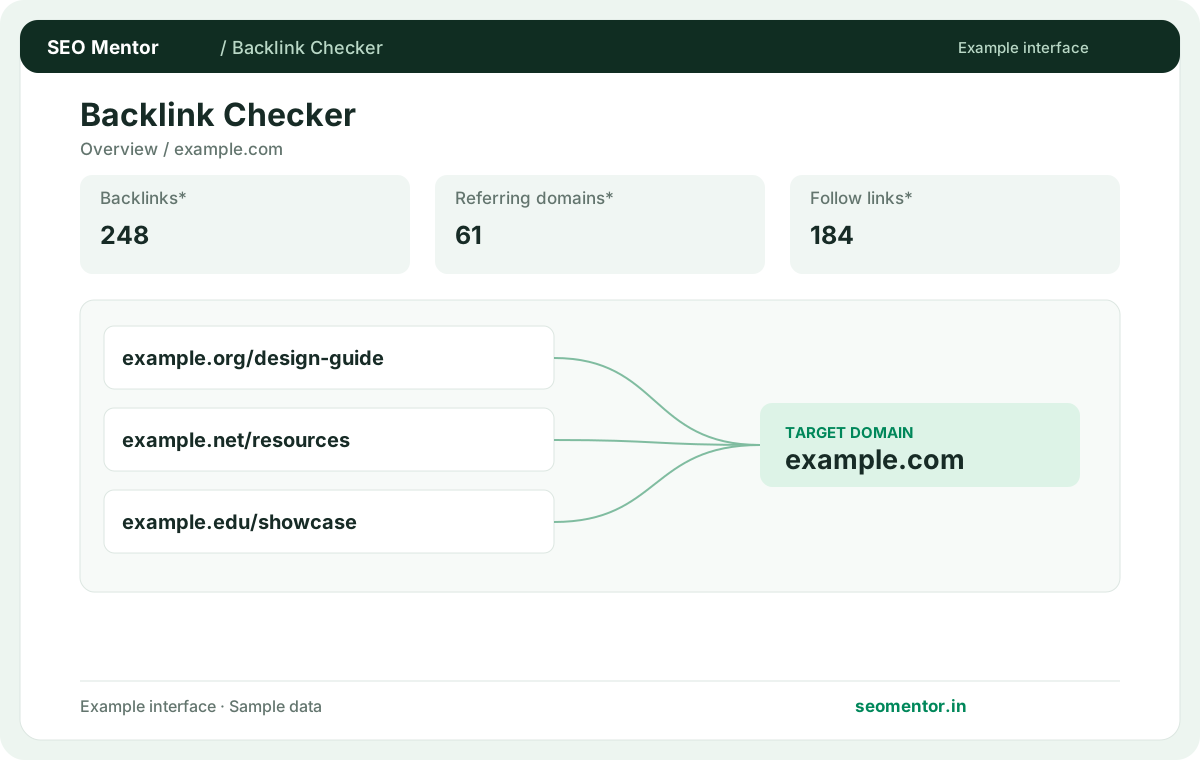
Enter your details and run the free tool to see the results on this page.
Free to use. Results appear on this page.
A large backlink count can hide a weak link profile. Investigate the sources and diversity of available links, then use that evidence to guide outreach and competitive research.
For businesses and agencies, start with pages that support enquiries, product discovery and meaningful organic traffic. Treat automated findings as a starting point for verification.
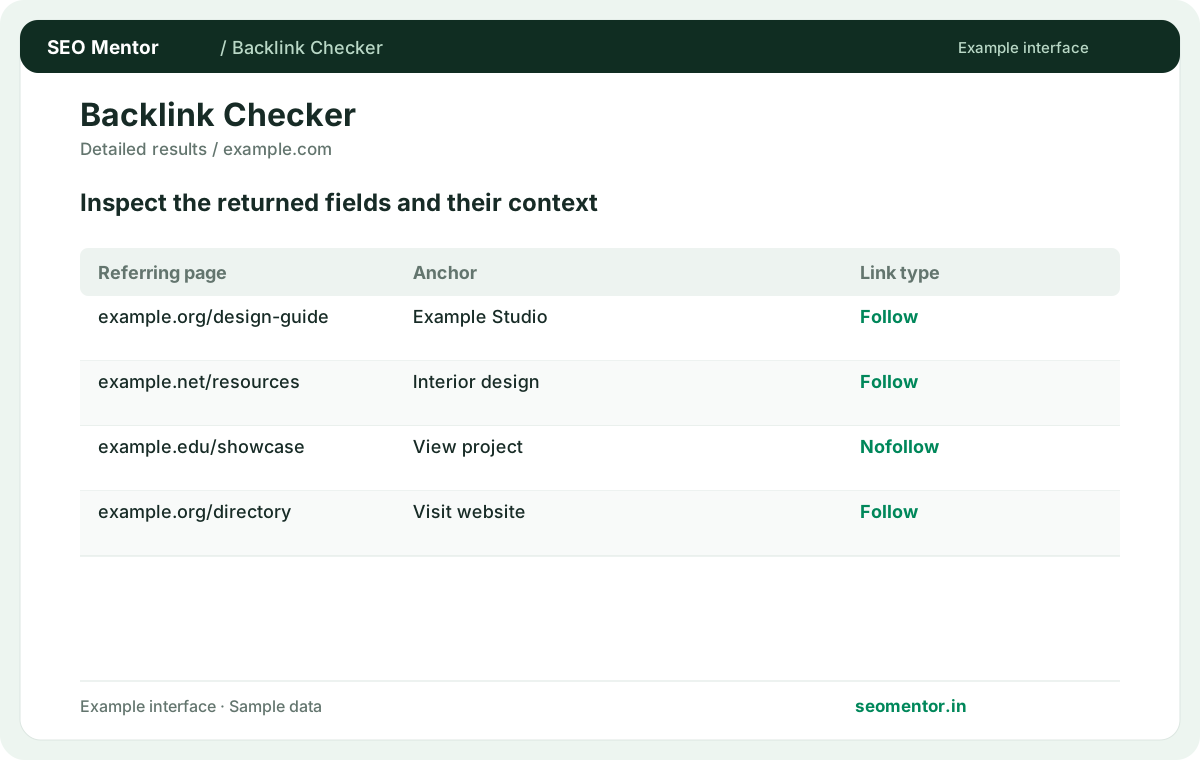
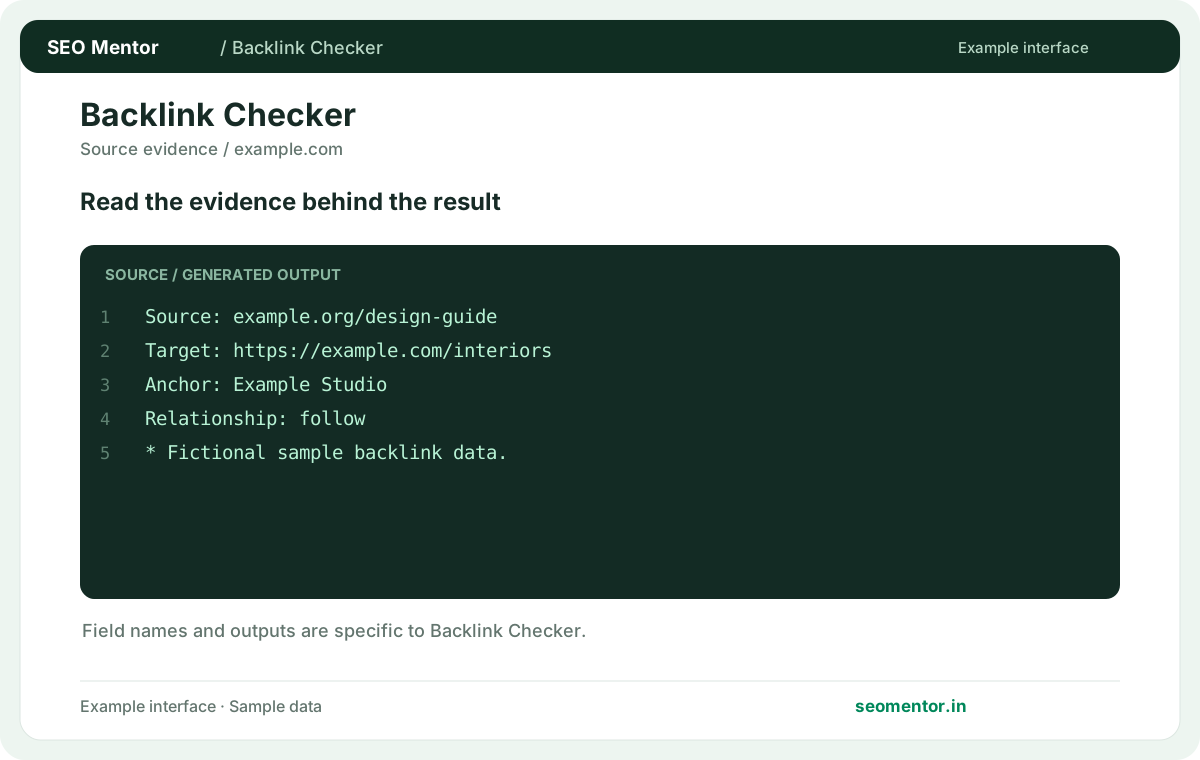
Look at relevance, concentration and editorial context. No third-party index can discover every link on the web.
Try the toolAssess referring sources, relevance and link attributes rather than treating every backlink as equal.
Use the tool's actual output to verify observations before making changes. The illustrated workflow helps explain the checks; use your own report to confirm individual findings.
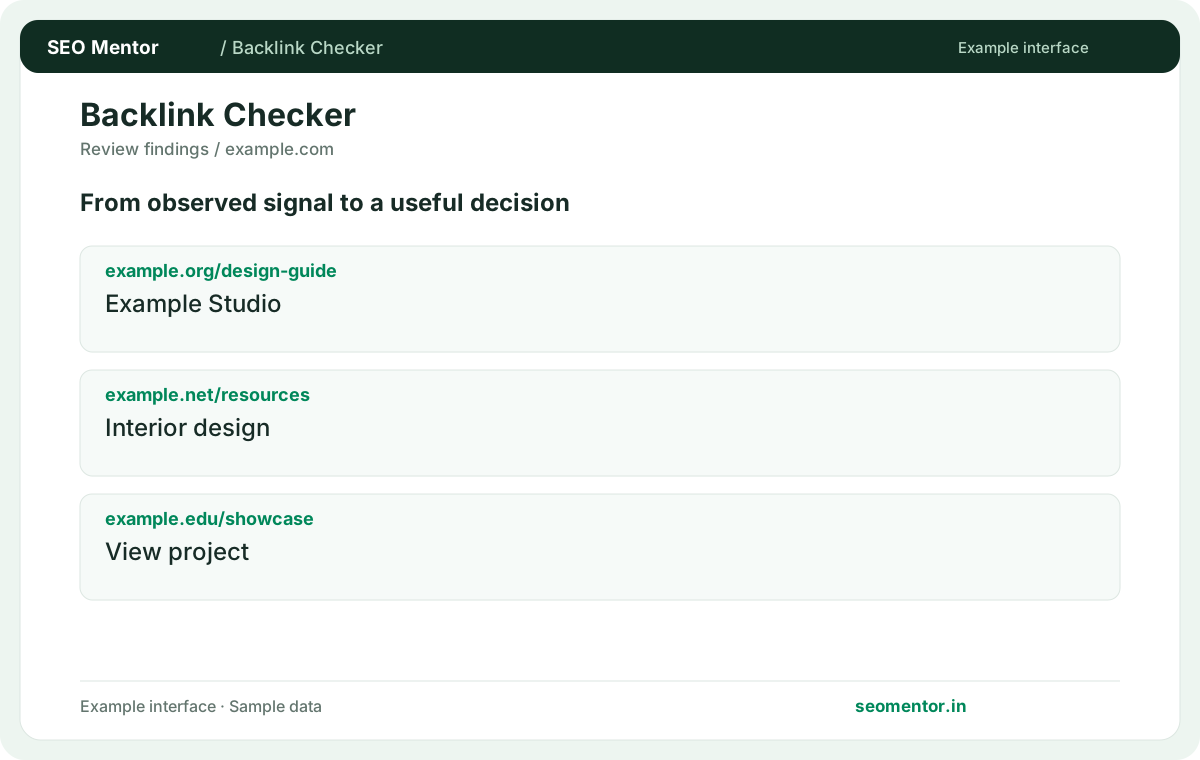
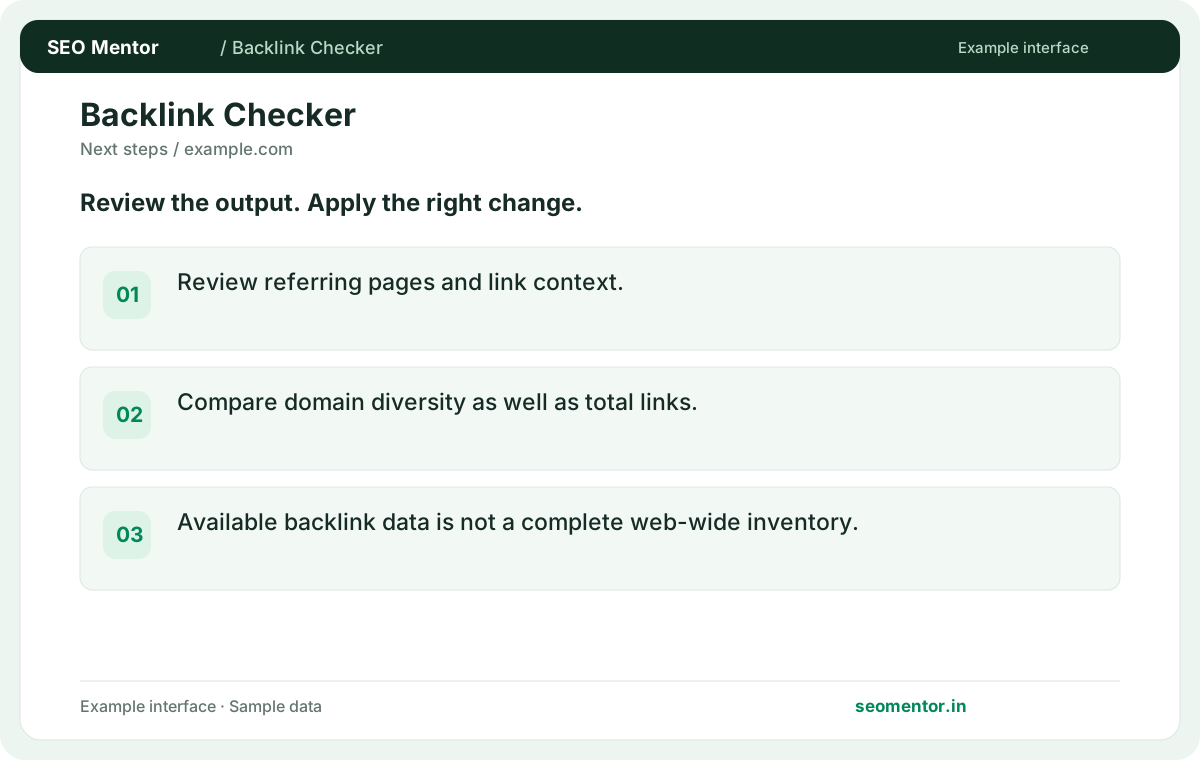
Review relevant sources, link context and potential risks before planning outreach.
Start your analysis ↗Review the referring pages, anchor text and link relationships available for your business website. Look at the context of each source before deciding whether it offers a useful partnership, outreach opportunity or issue to investigate.
A link from a genuinely relevant industry publication or local business partner can be more informative than a large set of unrelated directory links. Review editorial context and destination pages.
Backlink indexes vary in coverage and freshness. Use the available data to investigate link diversity, new and lost links and relevant competitors; avoid assuming the count is exhaustive.
Keep the result alongside the page or domain reviewed, so you can compare the evidence after making changes.
A backlink is a link instance. A referring domain counts a source domain once even if it links from several pages.
A source with 30 links from a single domain still contributes just one referring domain in a domain-level count.
Open the reported source page and verify that the link remains present. Review its surrounding text for context.
Check whether the link sits in editorial text, a directory listing or a sitewide template before assigning value to the placement.
The provider may have incomplete coverage or may not have refreshed that source page. Check the page directly before assuming removal.
A newly published partner link may be real before the provider discovers it. Save the source URL so you can check it directly later.
A sitewide link can appear on many pages of one domain. Compare unique sources as well as the raw number of links.
A partner logo in the footer of 200 pages may create 200 observed links from one source. Compare that separately from a research article cited by 20 independent publishers, then inspect a sample of those publisher pages to confirm the citations are relevant.
It may appear when discovered by the provider. Review the attribute alongside relevance and the actual visitors the link could send.
A relevant industry listing can send visitors even if its link is marked nofollow. Assess referral usefulness separately from link metrics.
Check topical fit, editorial context and page quality first. A domain-level number alone says little about the placement.
A high-scoring general directory can be less useful to your customers than a specialist association with a relevant resource page.
Compare prior records with the live source and destination. A removed page, redirect or changed anchor can explain the difference.
Open both ends of the link. If the source still links but the destination was retired, fix the target or redirect it to a genuine replacement.
Verify that valuable links reach an appropriate final page. Update internal references and request direct updates from important referring sites where practical.
For important editorial citations, update your redirects and contact the publisher when a direct change would improve the visitor’s path.
Treat unusual patterns as leads for manual review. Examine representative pages before deciding whether any action is warranted.
A spike from similar domains is a reason to sample the sources and confirm their context, especially if totals changed suddenly.
Keep the target scope and provider consistent. Record the date and compare newly observed sources separately from total link counts.
Use consistent snapshots and track verified additions, removals and redirects separately so a provider update is easier to distinguish from a real change.
SEO Mentor helps you identify opportunities. SEOKart can help put those findings into action with professional SEO services, technical improvements and ongoing optimisation.
Explore SEOKart SEO Services