Review the publisher id details
Review returned publisher-domain associations. Compare the reported publisher id, domain, domain with the page or domain you intended to check.
Search for observable websites associated with an AdSense publisher ID. Use the available records to investigate connections between domains.
Use Reverse AdSense Lookup ↗
Enter the required details to explore the available output and report options.
Free to use. Results appear on this page.
A matching publisher identifier does not establish legal ownership or control. Review the source evidence before making changes.
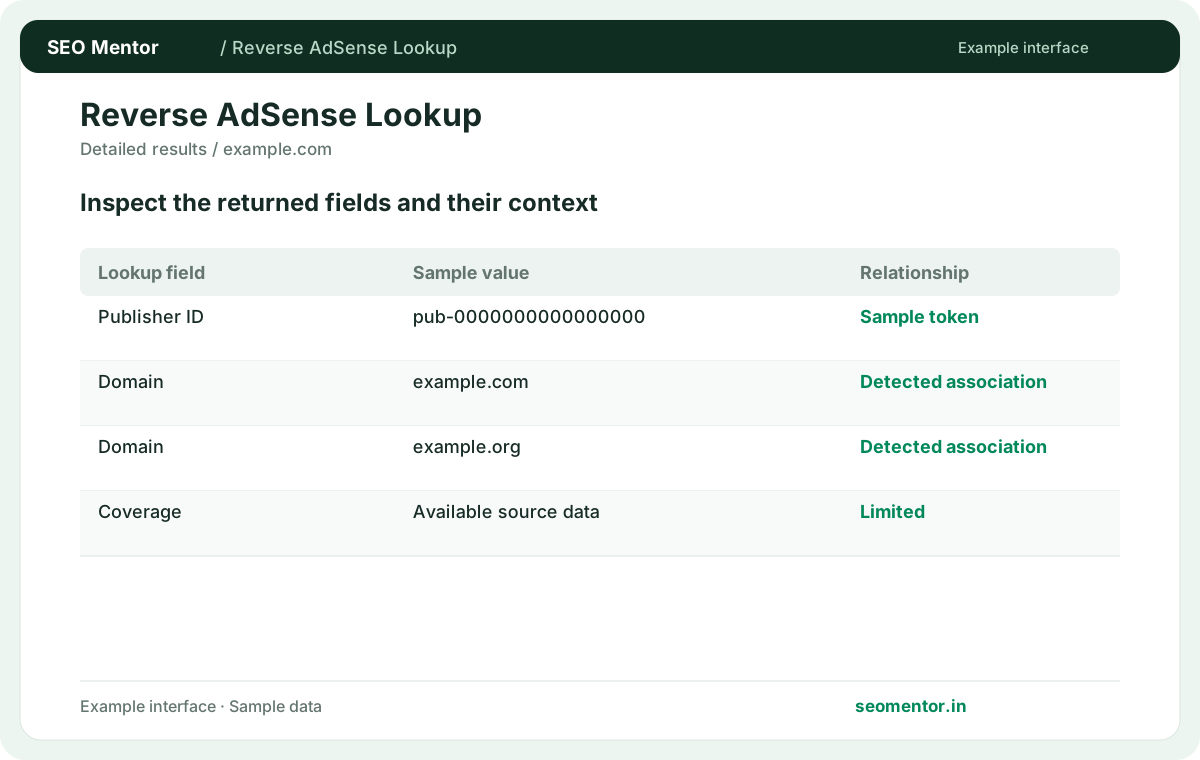
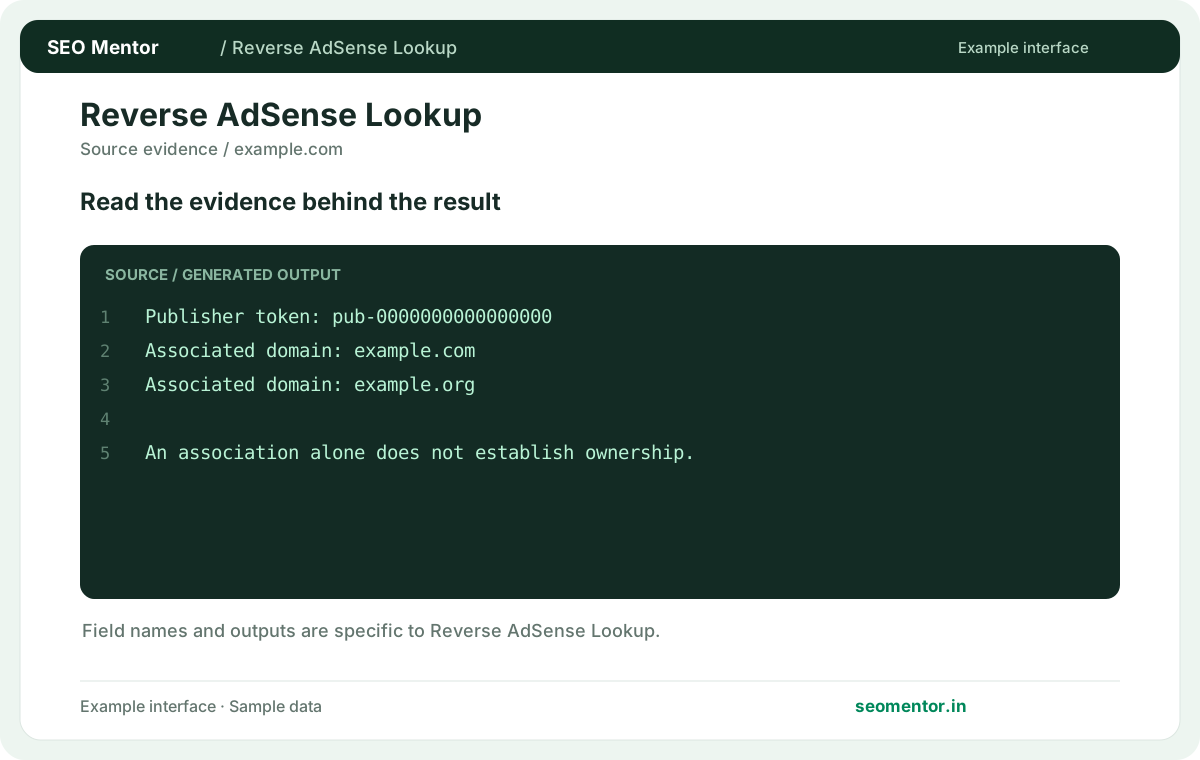
Consider publisher id match, observed domains, evidence quality together instead of relying on a single headline indicator.
A matching publisher identifier does not establish legal ownership or control. Compare the sample workflow with the live site and its actual data.

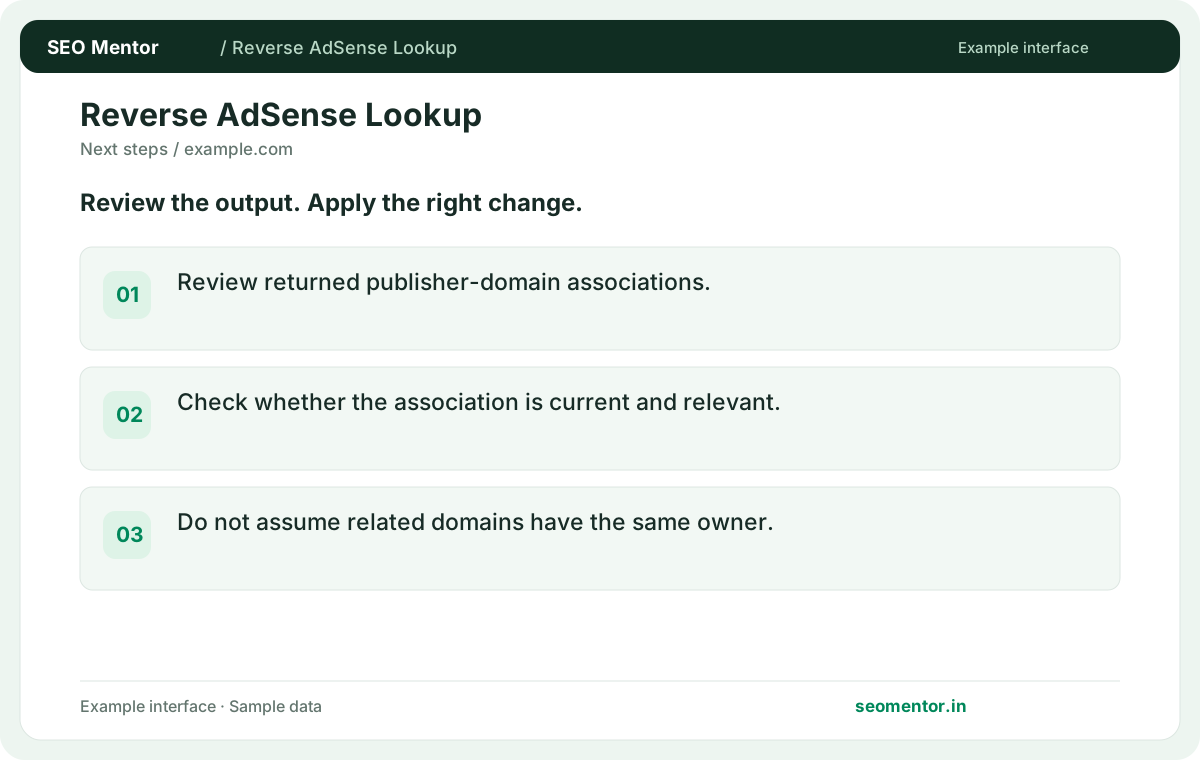
Prioritise the findings that affect your audience and revisit them after changes. A matching publisher identifier does not establish legal ownership or control.
Review the available domain associations for an AdSense publisher identifier. Use the returned data as a research lead, and verify the current page context before assuming a relationship between businesses or websites.
Review returned publisher-domain associations. Compare the reported publisher id, domain, domain with the page or domain you intended to check.
Check whether the association is current and relevant. Do not assume related domains have the same owner.
Keep the result alongside the page or domain reviewed, so you can compare the evidence after making changes.
Submit the public publisher identifier in the expected format. Check its digits against the source where you found it.
Related check — Why does a previously found site no longer display the identifier? Ads configuration or page markup may have changed. Compare current evidence with the historical observation.
The data source observed the identifier in connection with the site. Verify the live public evidence before drawing conclusions.
Related check — What should I enter for reverse lookup? Submit the public publisher identifier in the expected format. Check its digits against the source where you found it.
Shared monetisation relationships or provider records can have different explanations. Establish ownership through independent evidence.
If two sites share a published identifier, record the public declaration and its date first. Check whether the listing identifies a direct or reseller relationship and seek independent evidence before making a claim about ownership.
The data source may not have crawled it or may have incomplete coverage. Treat the result as a discovery list.
Related check — What does a reported website association mean? The data source observed the identifier in connection with the site. Verify the live public evidence before drawing conclusions.
A public identifier does not reveal account earnings. Revenue is available only through authorised account reporting.
Related check — Should I use an identifier from a private account screen? Use only public evidence you are authorised to inspect. Keep login details and private account data out of the tool.
Inspect public page source or the relevant advertising declarations. Record where the identifier appears and the date observed.
Related check — What should I record for competitive research? Keep the observed domain, publisher identifier, source and verification date. Separate confirmed observations from hypotheses.
Ads configuration or page markup may have changed. Compare current evidence with the historical observation.
Related check — Why might an associated site be missing? The data source may not have crawled it or may have incomplete coverage. Treat the result as a discovery list.
Public ad declarations may list multiple authorised relationships. Read each record's context instead of inferring control.
Related check — Does one identifier prove common ownership? If two sites share a published identifier, record the public declaration and its date first. Check whether the listing identifies a direct or reseller relationship and seek independent evidence before making a claim about ownership.
Keep the observed domain, publisher identifier, source and verification date. Separate confirmed observations from hypotheses.
Related check — How can I verify an association manually? Inspect public page source or the relevant advertising declarations. Record where the identifier appears and the date observed.
Use only public evidence you are authorised to inspect. Keep login details and private account data out of the tool.
Related check — Can I look up AdSense earnings? A public identifier does not reveal account earnings. Revenue is available only through authorised account reporting.
SEO Mentor helps you identify opportunities. SEOKart can help put those findings into action with professional SEO services, technical improvements and ongoing optimisation.
Explore SEOKart SEO Services