Review the backlinks details
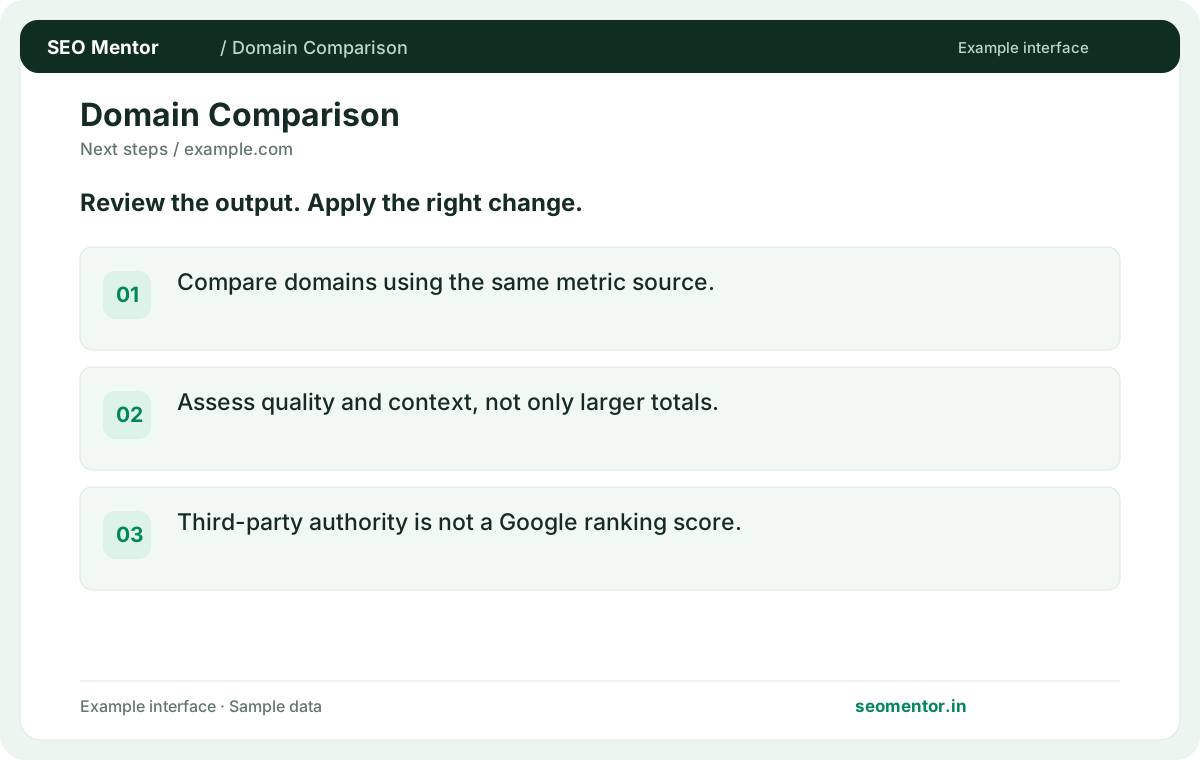
Compare domains using the same metric source. Compare the reported backlinks, referring domains, follow links with the page or domain you intended to check.
Compare two to five domains side by side using available authority and backlink signals. See how link profiles differ across competing websites.
Start Domain comparison ↗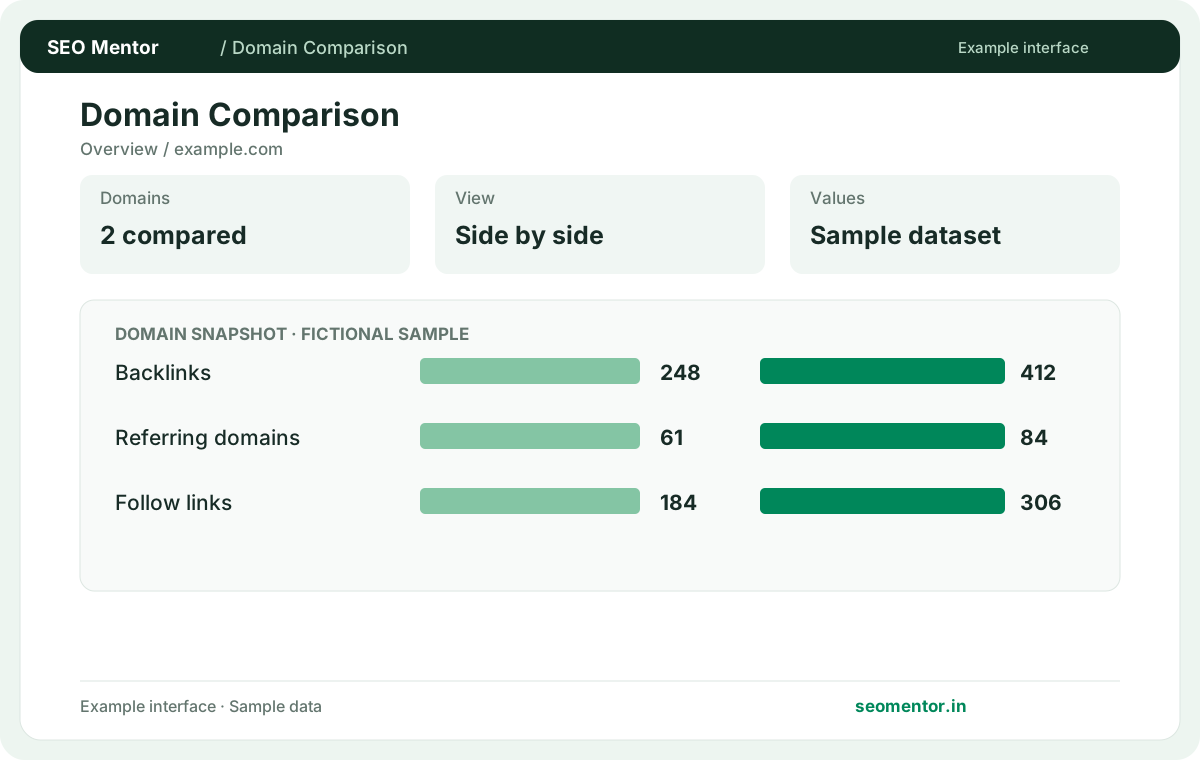
Enter your details and run the free tool to see the results on this page.
Free to use. Results appear on this page.
Compare similar sites and interpret differences alongside content and technical performance. A meaningful comparison starts with relevant domains, not a headline number.
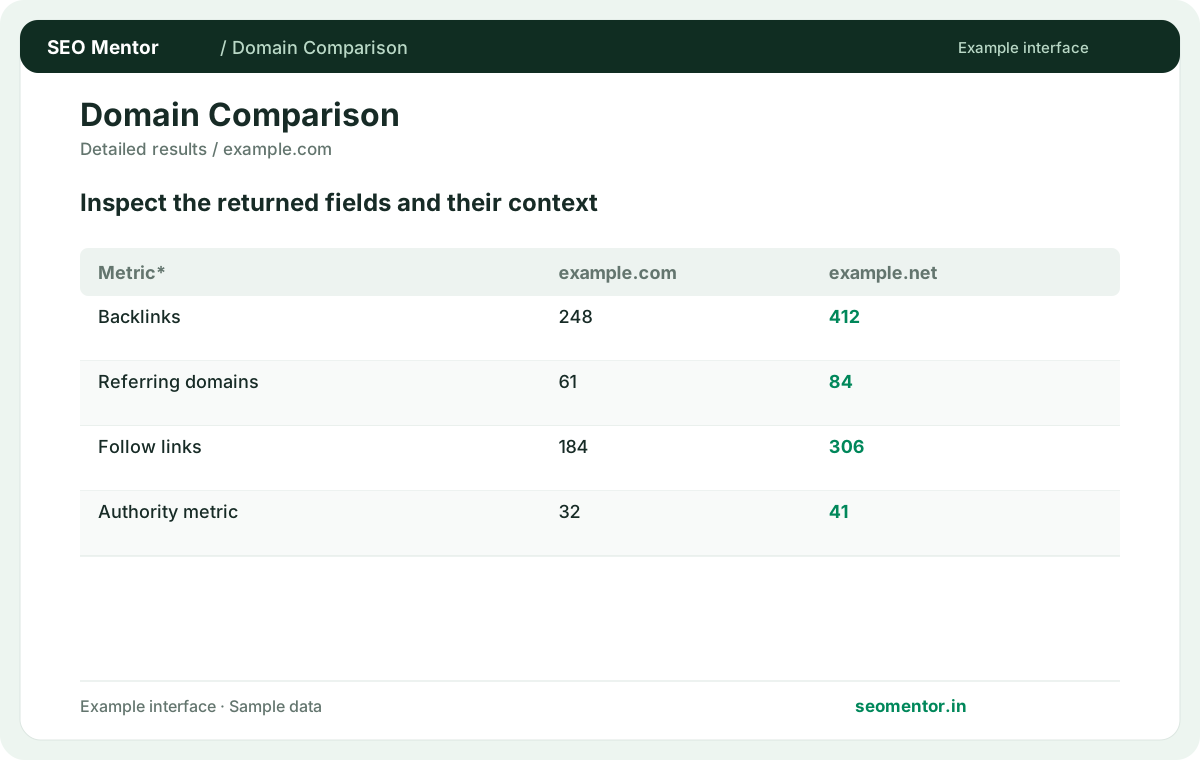
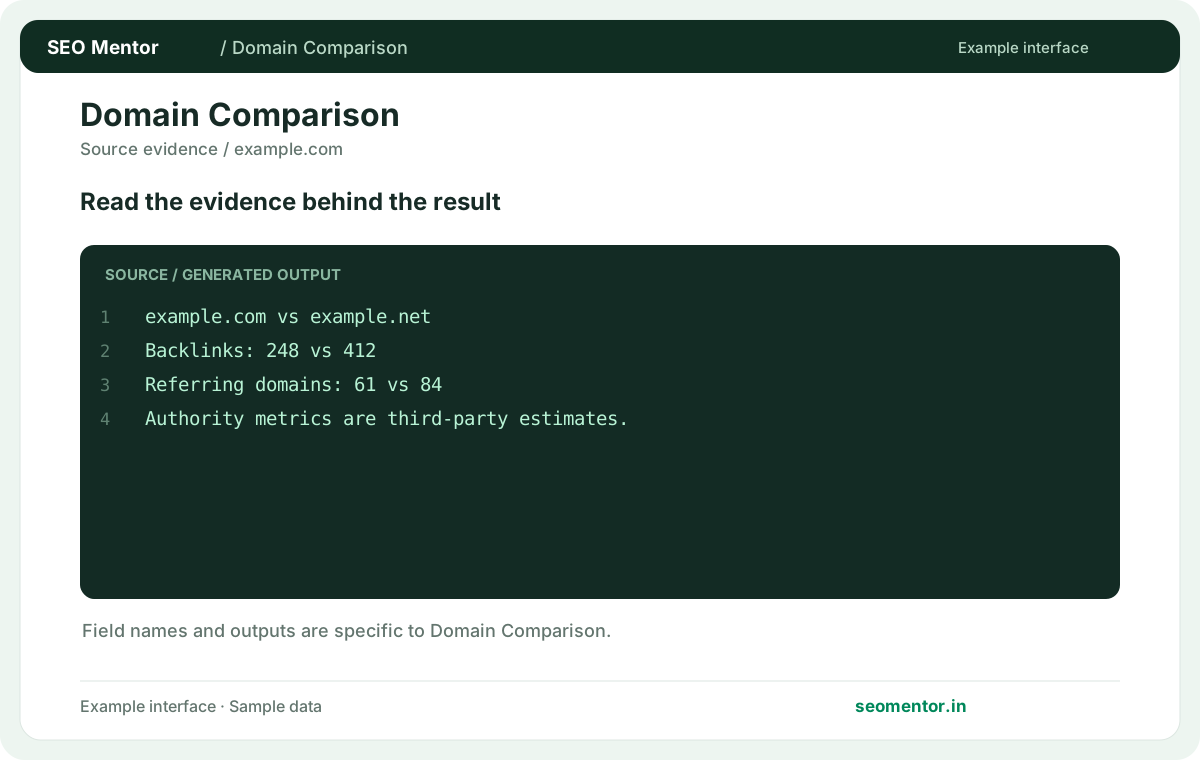
Examine referring domains, link diversity, authority indicator and other available evidence before making changes.
Record what the report actually shows, review relevant sources, and compare findings with the pages and audiences that matter to your business.
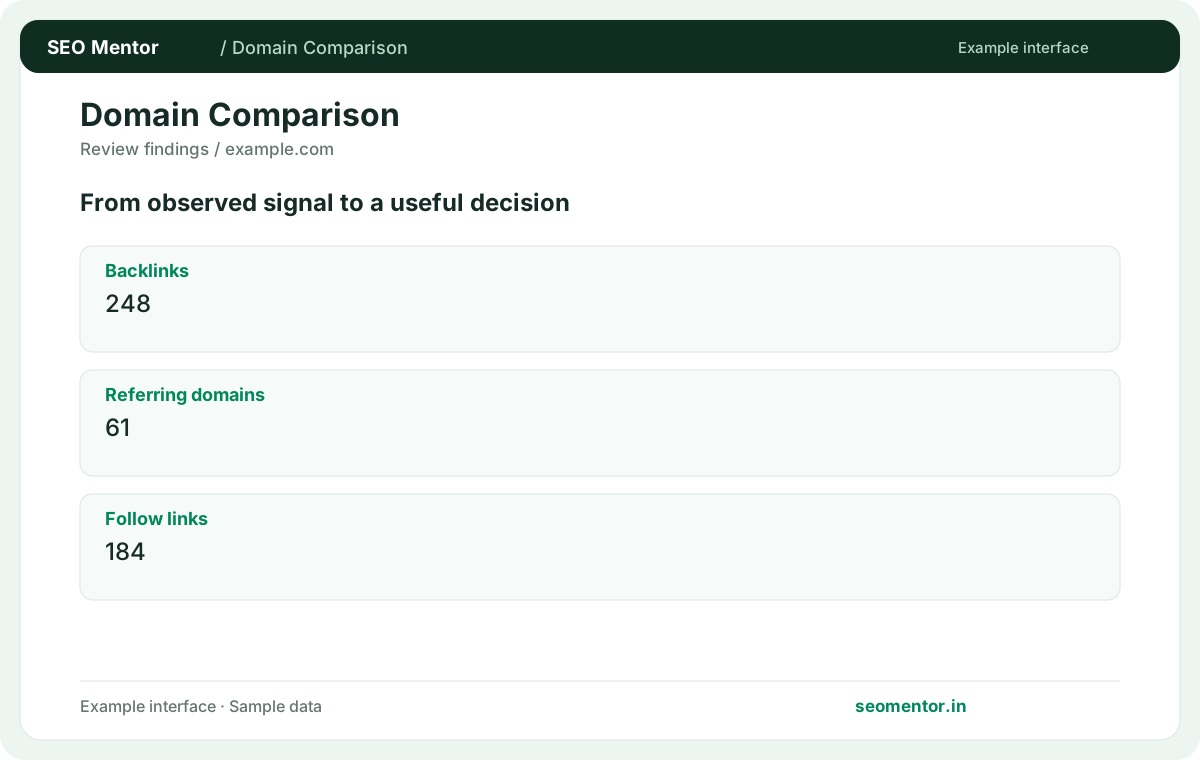
Compare similar sites and interpret differences alongside content and technical performance. Revisit the findings after meaningful changes and avoid interpreting illustrative examples as actual results.
Compare available domain signals side by side for businesses serving similar audiences. Use the same metric source and scope so differences in link totals or authority estimates are interpreted consistently.
Compare domains using the same metric source. Compare the reported backlinks, referring domains, follow links with the page or domain you intended to check.
Assess quality and context, not only larger totals. Third-party authority is not a Google ranking score.
Keep the result alongside the page or domain reviewed, so you can compare the evidence after making changes.
Enter a small group of direct competitors. Comparing a focused set makes the underlying backlink differences easier to interpret.
Related check — What should go into a competitor benchmark? Record the domain set, provider date and scope. Include examples of comparable pages and sources so the numbers can be interpreted.
Compare the host scope consistently across all entries. If you want to compare individual pages, inspect their link sources separately.
Related check — How do I compare before and after a migration? Track both addresses and the redirect mapping. Separate changes in host scope from changes in the links actually observed.
Treat missing provider values as unavailable. Verify domain spelling and inspect available links before drawing conclusions.
Related check — Should I enter URLs or domains? Compare the host scope consistently across all entries. If you want to compare individual pages, inspect their link sources separately.
Compare the number of referring domains and inspect repeated links. A single source can produce a large share of the raw total.
Suppose site A has 12,000 observed links from 80 domains and site B has 900 from 300 domains. Check whether a template-wide placement explains site A's volume and review representative editorial sources from both profiles before deciding what the difference means.
First decide which entity and scope match your question. A standalone subdomain can represent a different audience and content set.
Related check — How many sites should I compare? Enter a small group of direct competitors. Comparing a focused set makes the underlying backlink differences easier to interpret.
Look for relevant referring sources or content assets that explain the gap. A high-level difference needs a practical explanation.
Related check — Why compare sites serving the same market? Their editorial opportunities and customer needs overlap. A larger unrelated market can make totals misleading.
Their editorial opportunities and customer needs overlap. A larger unrelated market can make totals misleading.
Related check — Which differences should I act on? Look for relevant referring sources or content assets that explain the gap. A high-level difference needs a practical explanation.
Backlink and authority signals describe link evidence. Use analytics for measured visits and referral performance.
Related check — What if one site has many more backlinks? Suppose site A has 12,000 observed links from 80 domains and site B has 900 from 300 domains. Check whether a template-wide placement explains site A's volume and review representative editorial sources from both profiles before deciding what the difference means.
Track both addresses and the redirect mapping. Separate changes in host scope from changes in the links actually observed.
Related check — Can a comparison reveal where visitors come from? Backlink and authority signals describe link evidence. Use analytics for measured visits and referral performance.
Record the domain set, provider date and scope. Include examples of comparable pages and sources so the numbers can be interpreted.
Related check — Can I compare a parent domain with a subdomain? First decide which entity and scope match your question. A standalone subdomain can represent a different audience and content set.
SEO Mentor helps you identify opportunities. SEOKart can help put those findings into action with professional SEO services, technical improvements and ongoing optimisation.
Explore SEOKart SEO Services