Review the interior design details
Review repetition in the actual page text. Compare the reported interior design, living room, home with the page or domain you intended to check.
Review how often words and phrases occur on a public page. Spot repetition and see whether the language reflects the topic naturally.
Use Keyword Density Checker ↗
Enter the required details to preview the available output and access applicable report options.
A density percentage is descriptive, not a Google ranking target. Use the relevant fields to identify what needs further investigation.
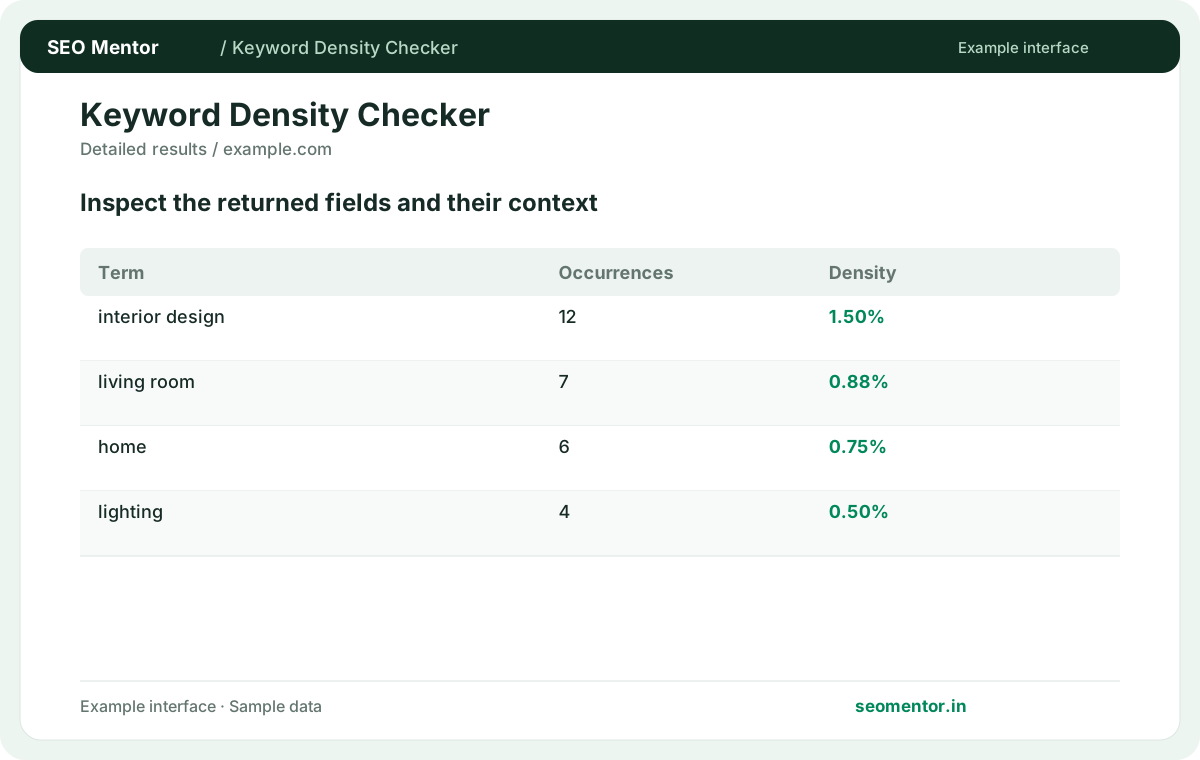
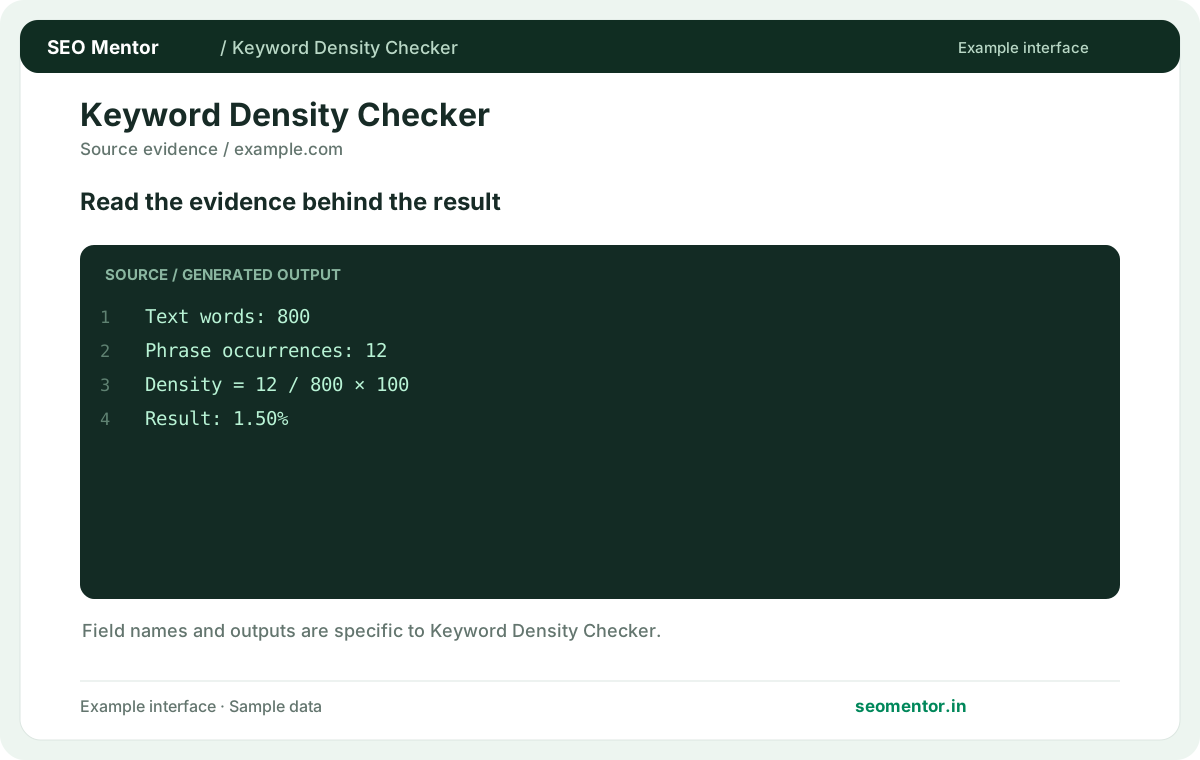
Look at top repeated phrases, word frequency, content vocabulary together, rather than drawing conclusions from one value.
A density percentage is descriptive, not a Google ranking target. Document the input, verify the result and compare similar pages where appropriate.
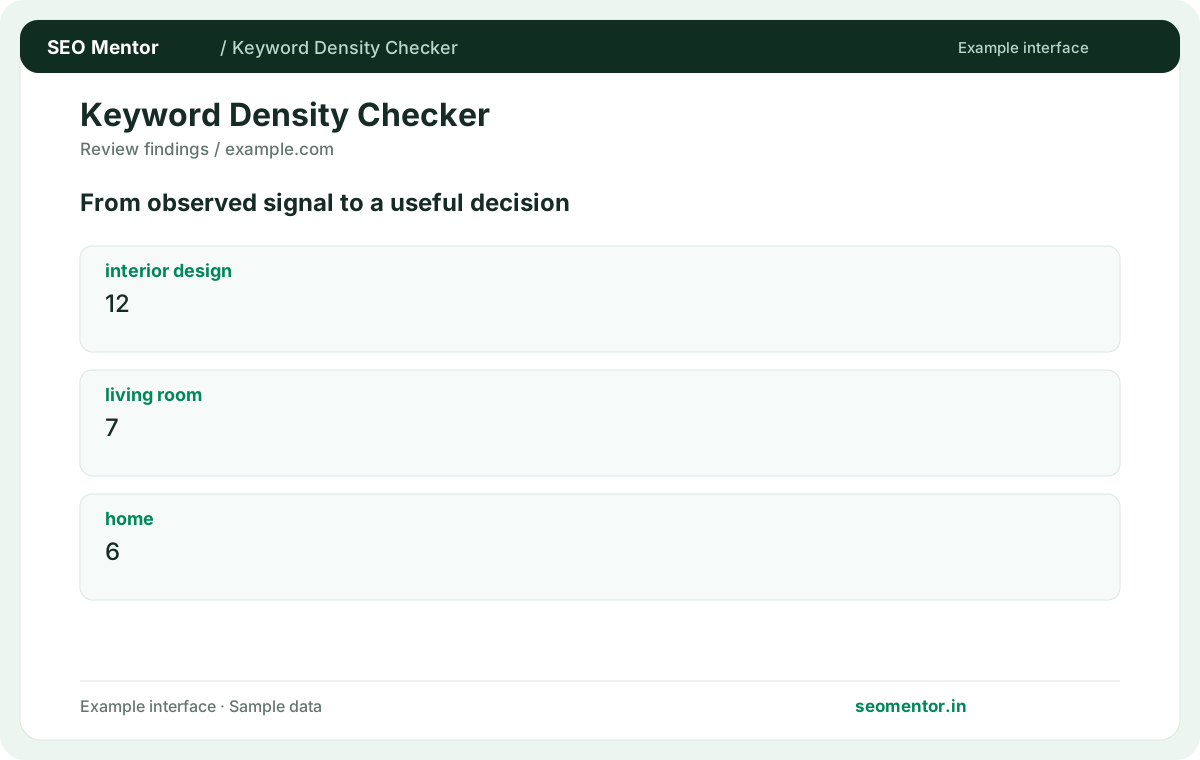
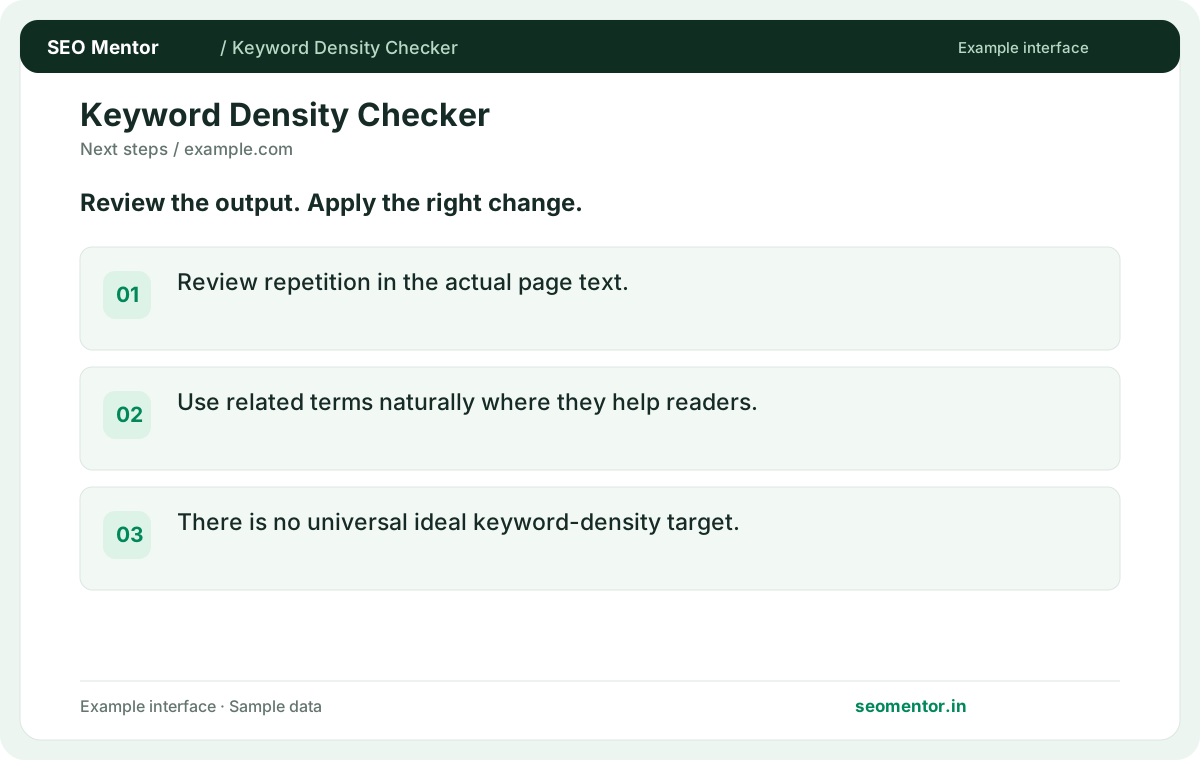
Use the findings to prioritise useful changes for visitors. A density percentage is descriptive, not a Google ranking target.
Review repeated words and phrases in the text of a page. For service and product content, prioritise clear explanations and natural language over trying to reach a fixed keyword-density percentage.
Review repetition in the actual page text. Compare the reported interior design, living room, home with the page or domain you intended to check.
Use related terms naturally where they help readers. There is no universal ideal keyword-density target.
Keep the result alongside the page or domain reviewed, so you can compare the evidence after making changes.
It helps reveal repeated wording in fetched page text. Use the counts to spot language worth reviewing in context.
Related check — Can menus skew the result? A store category might repeat “free shipping” in the header, every product card and the footer. Separate that repeated interface copy from the main category description before deciding whether editorial wording needs revision.
Write for the searcher's task and natural language. A fixed percentage can encourage unnecessary repetition.
Related check — What can low frequency indicate? It can suggest the page rarely names its subject. Review the title, introduction and substantive sections before adding terms.
Repeated navigation and footer text may affect counts. Compare prominent phrases with the main article before revising it.
A store category might repeat “free shipping” in the header, every product card and the footer. Separate that repeated interface copy from the main category description before deciding whether editorial wording needs revision.
Frequency tools may count literal forms separately. Read related variants together when evaluating topic coverage.
Related check — How do I compare competitor frequency? Compare pages serving the same intent and with similar content scope. Use their coverage as context rather than a target ratio.
Check whether repetition helps readers recognise the offer or simply duplicates headings and boilerplate.
Related check — Is there a target keyword percentage? Write for the searcher's task and natural language. A fixed percentage can encourage unnecessary repetition.
It can suggest the page rarely names its subject. Review the title, introduction and substantive sections before adding terms.
Related check — How should I assess a repeated service name? Check whether repetition helps readers recognise the offer or simply duplicates headings and boilerplate.
Compare pages serving the same intent and with similar content scope. Use their coverage as context rather than a target ratio.
Related check — Why do singular and plural forms differ? Frequency tools may count literal forms separately. Read related variants together when evaluating topic coverage.
Fetched text can differ from the rendered page. Check the source and visible copy if results appear surprising.
Related check — How is phrase frequency useful? It helps reveal repeated wording in fetched page text. Use the counts to spot language worth reviewing in context.
Prefer terminology customers use and that accurately describes the page. Keep surrounding sentences readable.
Related check — How should I check a rewrite? Compare the old and new text for repetitive phrases and missing concepts. Read the page aloud before publishing.
Compare the old and new text for repetitive phrases and missing concepts. Read the page aloud before publishing.
Related check — How do I identify a useful phrase to keep? Prefer terminology customers use and that accurately describes the page. Keep surrounding sentences readable.
SEO Mentor helps you identify opportunities. SEOKart can help put those findings into action with professional SEO services, technical improvements and ongoing optimisation.
Explore SEOKart SEO Services