Review the authority metric details
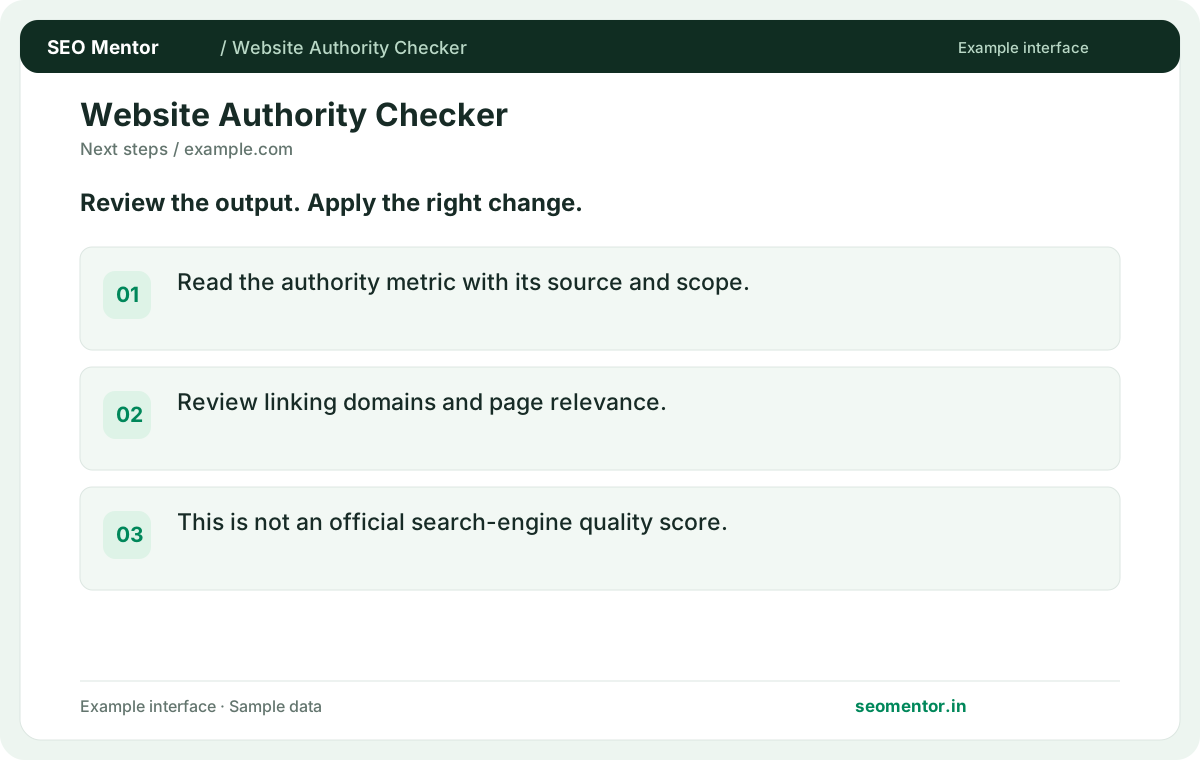
Read the authority metric with its source and scope. Compare the reported authority metric, linking domains, backlinks with the page or domain you intended to check.
Check available website authority and backlink indicators. Use the findings to compare sites and identify differences worth investigating.
Start Website authority analysis ↗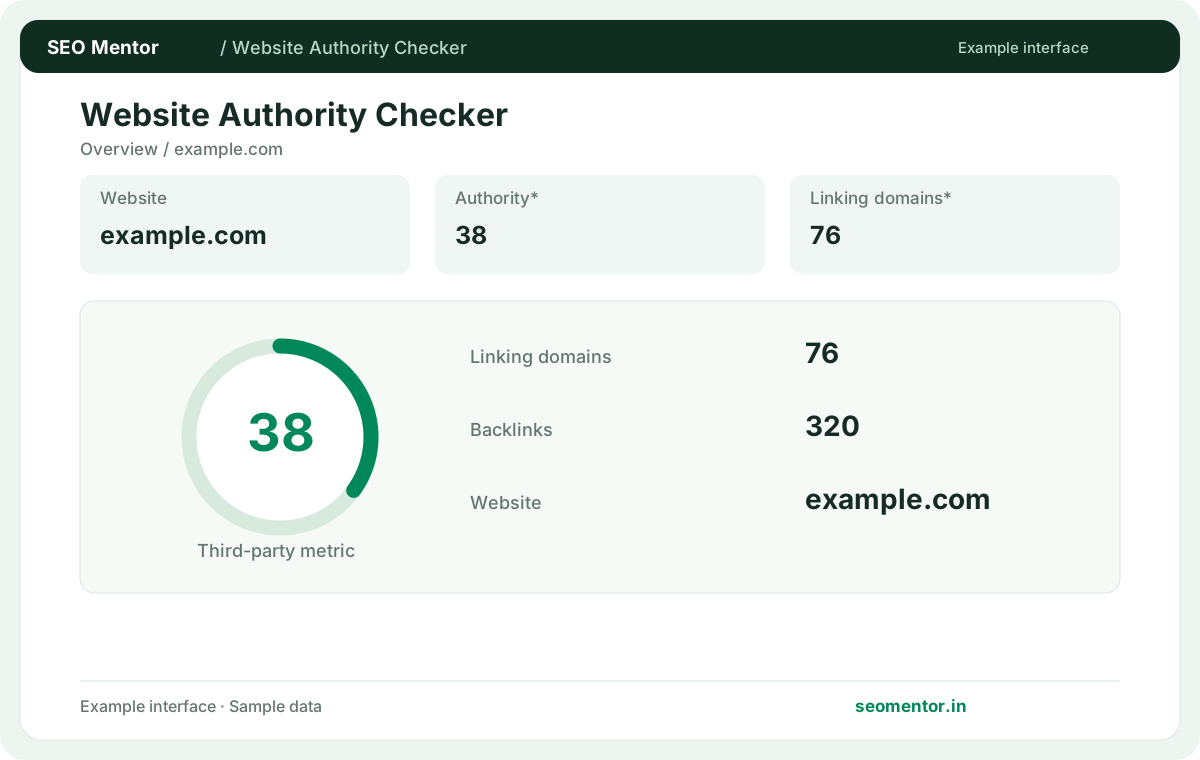
Enter your details and run the free tool to see the results on this page.
Free to use. Results appear on this page.
Use authority indicators as supporting evidence, not promises of rankings. A meaningful comparison starts with relevant domains, not a headline number.
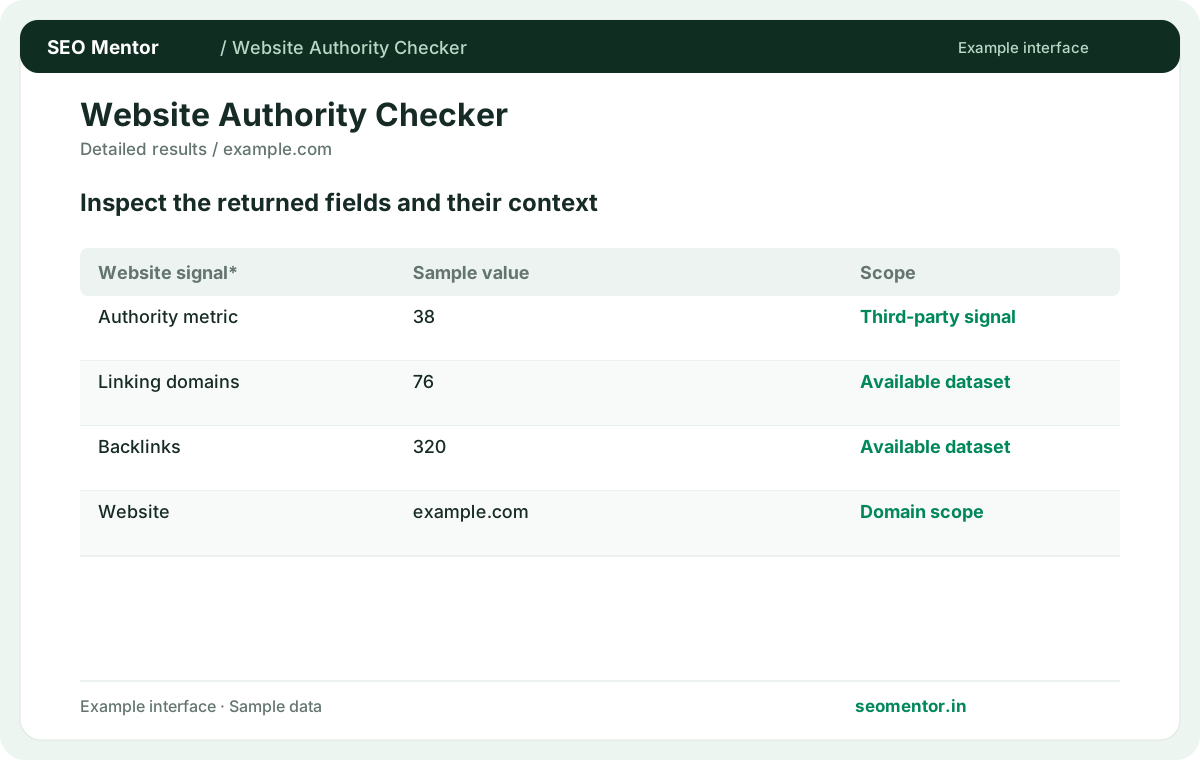
Examine domain references, link attributes, content relevance and other available evidence before making changes.
Record what the report actually shows, review relevant sources, and compare findings with the pages and audiences that matter to your business.
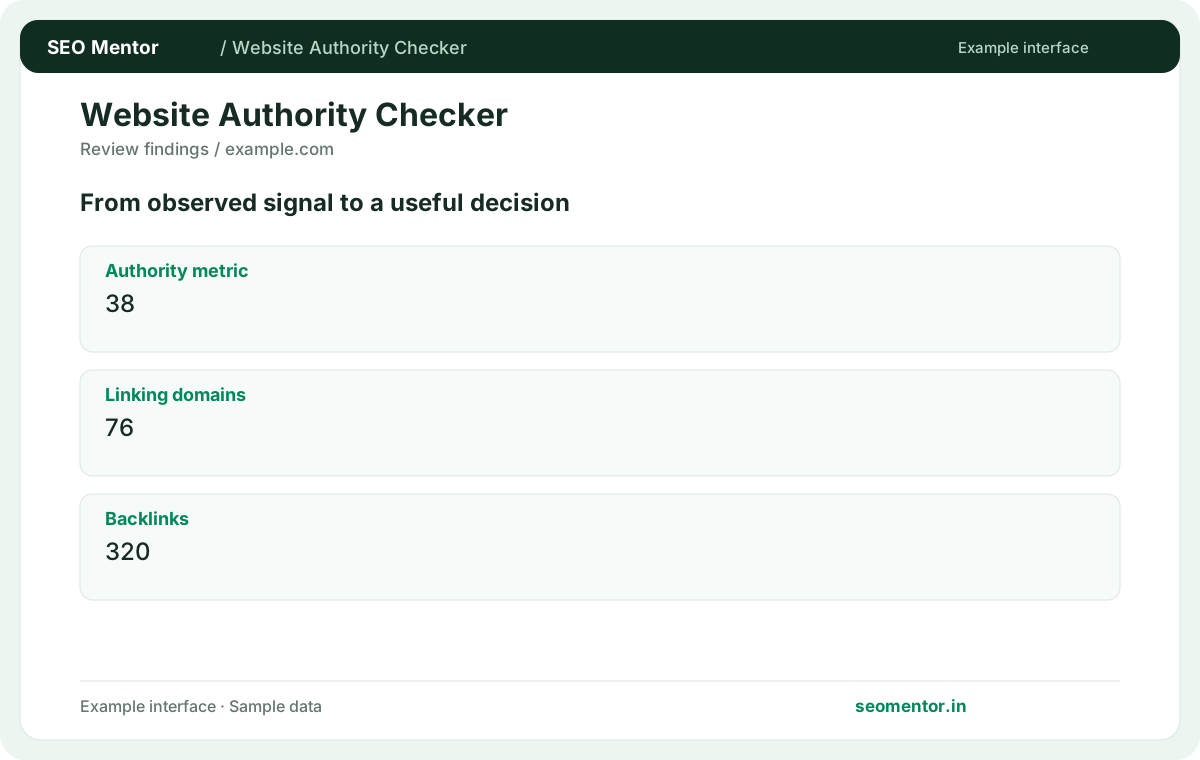
Use authority indicators as supporting evidence, not promises of rankings. Revisit the findings after meaningful changes and avoid interpreting illustrative examples as actual results.
Assess the available authority and link-profile signals for a website. Compare relevant sites using the same source, and inspect the underlying referring pages before drawing conclusions about quality.
Read the authority metric with its source and scope. Compare the reported authority metric, linking domains, backlinks with the page or domain you intended to check.
Review linking domains and page relevance. This is not an official search-engine quality score.
Keep the result alongside the page or domain reviewed, so you can compare the evidence after making changes.
It is a comparison signal based on available domain and link data. Interpret it alongside relevant sources.
Related check — Which link signals matter for a comparison? Review source diversity and the pages attracting links. Compare a few strong examples instead of relying on a total alone.
Choose equivalent host scopes and sites serving similar customers. Inspect actual referring pages to explain differences.
Related check — What if the score is unavailable? Verify that the domain is correct and inspect available backlinks. Data coverage may be limited for some sites.
It comes from the available third-party data. Use it as one research input.
Related check — Should I benchmark the root or a subdomain? Choose the host that represents the site you are analysing. Keep that scope consistent across periods.
Verify that the domain is correct and inspect available backlinks. Data coverage may be limited for some sites.
Related check — How can I compare two service websites? Choose equivalent host scopes and sites serving similar customers. Inspect actual referring pages to explain differences.
Yes. Review topical relevance and placement context before assuming the profile helps your particular pages.
A large site can attract many unrelated or repeated links while a specialist competitor has fewer but more useful citations. Sample the live source pages and look for topical relevance before using the indicator to set an outreach goal.
Provider observations may lag redirects and URL changes. Track old and new hosts while important links are updated.
Related check — Can a high value hide irrelevant links? A large site can attract many unrelated or repeated links while a specialist competitor has fewer but more useful citations. Sample the live source pages and look for topical relevance before using the indicator to set an outreach goal.
Review source diversity and the pages attracting links. Compare a few strong examples instead of relying on a total alone.
Related check — What is a website authority indicator? It is a comparison signal based on available domain and link data. Interpret it alongside relevant sources.
Choose the host that represents the site you are analysing. Keep that scope consistent across periods.
Related check — Does the indicator represent Google PageRank? It comes from the available third-party data. Use it as one research input.
Compare observed sources and collection dates. Look for real additions or removals before attributing the movement.
Related check — How should I use the result in a plan? Identify relevant topics and source opportunities. Pair the indicator with page quality, search intent and observed performance.
Identify relevant topics and source opportunities. Pair the indicator with page quality, search intent and observed performance.
Related check — How do I distinguish an authority change from a data update? Compare observed sources and collection dates. Look for real additions or removals before attributing the movement.
SEO Mentor helps you identify opportunities. SEOKart can help put those findings into action with professional SEO services, technical improvements and ongoing optimisation.
Explore SEOKart SEO Services