Review the domain details
Use the profile as an overview of available domain signals. Compare the reported domain, backlinks, referring domains with the page or domain you intended to check.
Build an overview of a domain from available authority and referring-site evidence. See which parts of its link profile warrant closer investigation.
Use Website Site Profiler ↗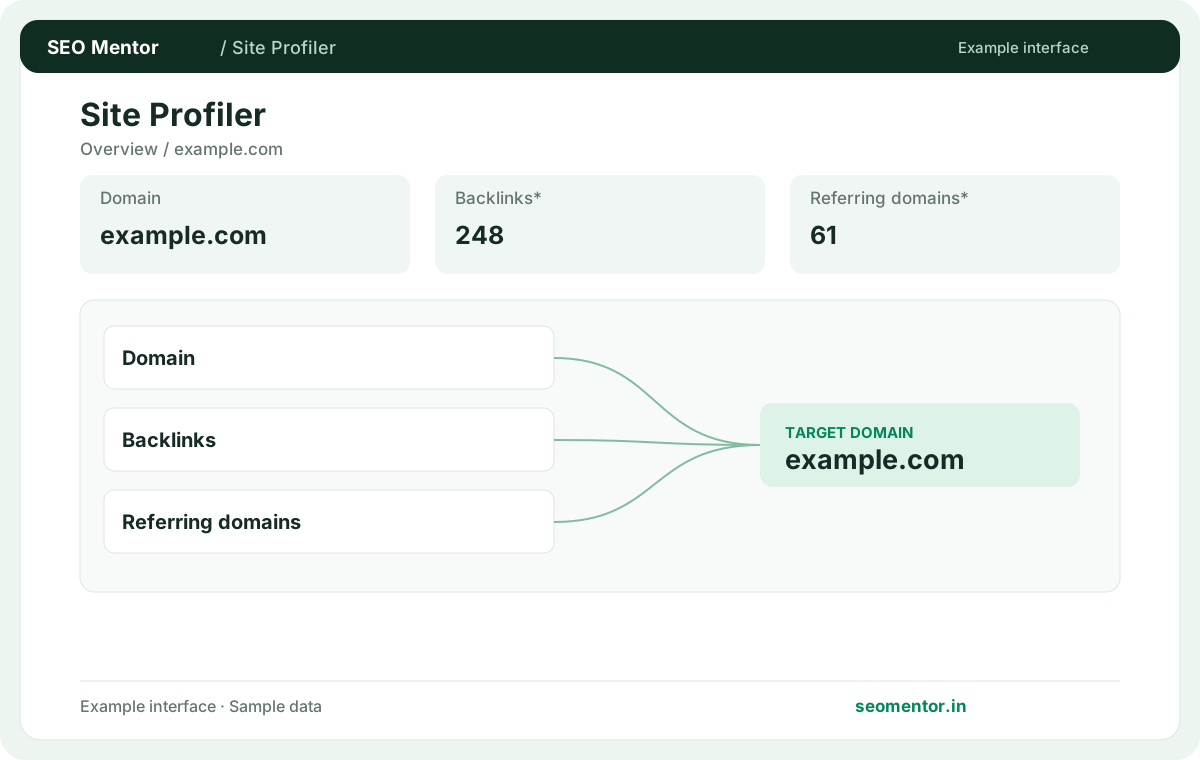
Enter the required details to explore the available output and report options.
Free to use. Results appear on this page.
Domain-level signals cannot replace a page-by-page SEO audit or guarantee rankings. Review the source evidence before making changes.
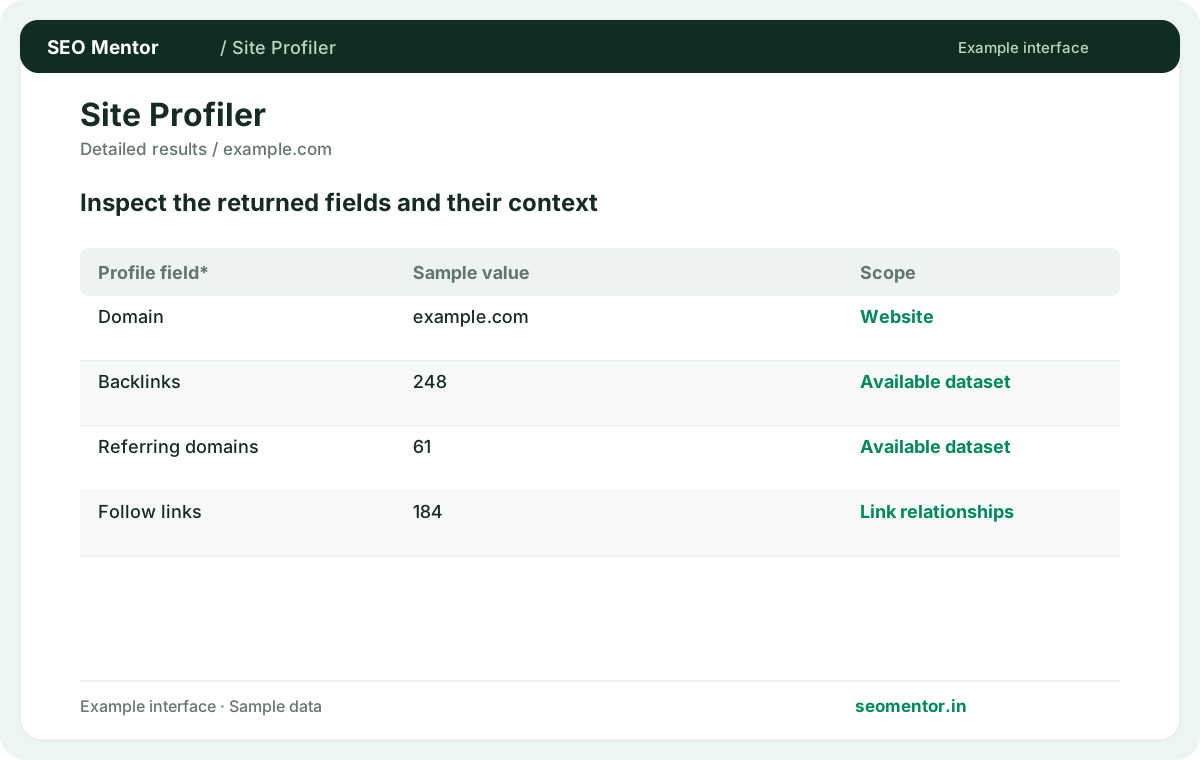
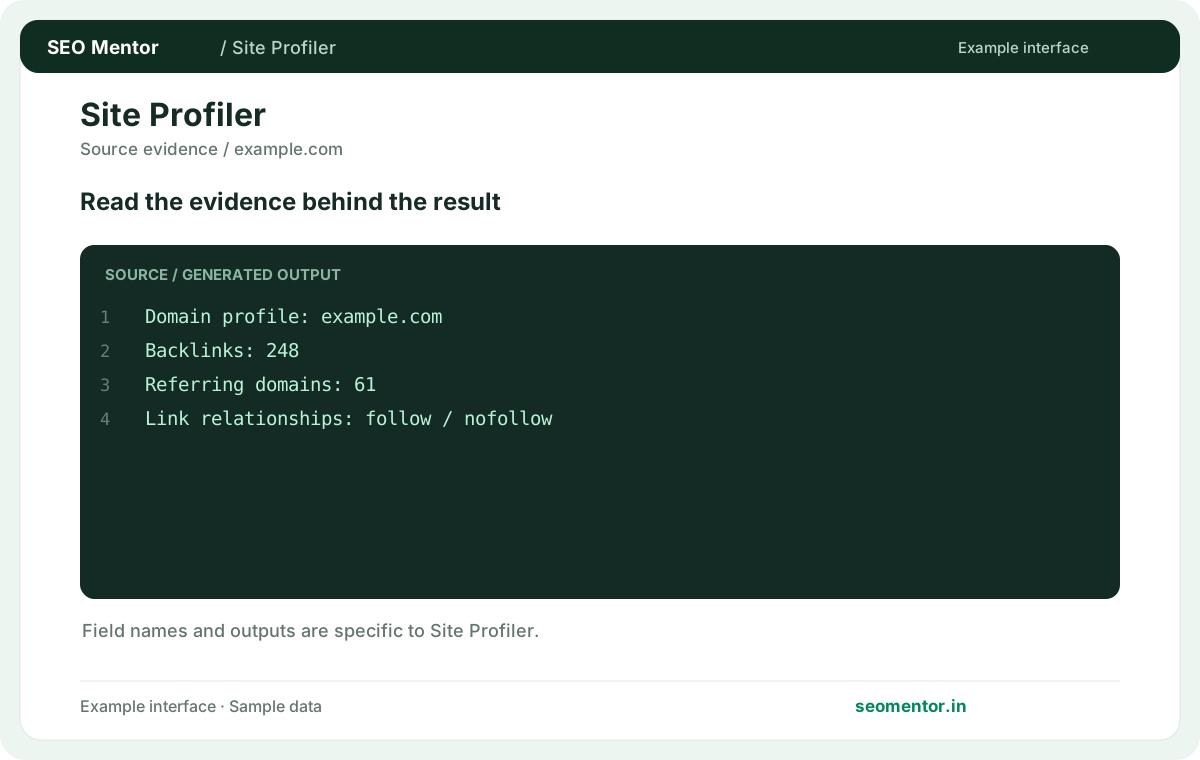
Consider referring domains, link diversity, authority context together instead of relying on a single headline indicator.
Domain-level signals cannot replace a page-by-page SEO audit or guarantee rankings. Compare the sample workflow with the live site and its actual data.
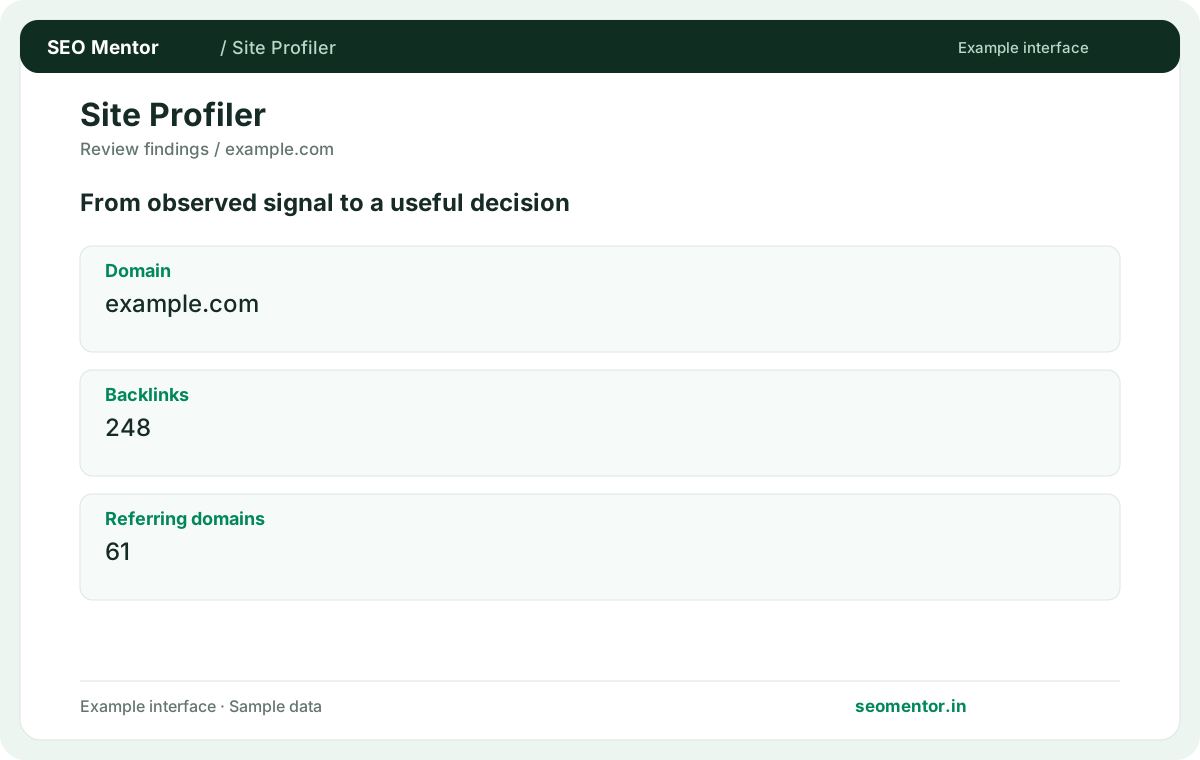
Prioritise the findings that affect your audience and revisit them after changes. Domain-level signals cannot replace a page-by-page SEO audit or guarantee rankings.
Build an overview of the available domain and backlink signals for a website. Use the profile to decide which sources or relationships need deeper investigation for your business.
Use the profile as an overview of available domain signals. Compare the reported domain, backlinks, referring domains with the page or domain you intended to check.
Inspect detailed source pages for link quality. Dataset coverage and refresh time can vary.
Keep the result alongside the page or domain reviewed, so you can compare the evidence after making changes.
It presents available domain and link indicators together. Review each metric's scope before comparing profiles.
Related check — Can I use the profile to estimate revenue? Link metrics cannot establish business results. Use verified analytics and commercial data for that assessment.
Identify relevant referring sites and inspect their individual pages. A profile gives you leads for manual review.
Related check — What should I inspect on an unfamiliar domain? Verify its current content, audience and live link placements. Domain data can reflect older versions of a site.
Link quality, source diversity and raw volume describe different properties. Compare the actual sources behind both numbers.
Related check — How do I recognise a concentrated profile? If a large portion of a profile appears to come from one directory, inspect multiple source URLs and see whether the same listing is syndicated. Compare distinct editorial sources separately to avoid mistaking repeated pages for a diverse audience.
Verify its current content, audience and live link placements. Domain data can reflect older versions of a site.
Related check — How can I use the profile during prospecting? Identify relevant referring sites and inspect their individual pages. A profile gives you leads for manual review.
Check whether a small group of sites accounts for most observations. Repeated links may obscure source diversity.
If a large portion of a profile appears to come from one directory, inspect multiple source URLs and see whether the same listing is syndicated. Compare distinct editorial sources separately to avoid mistaking repeated pages for a diverse audience.
Link metrics cannot establish business results. Use verified analytics and commercial data for that assessment.
Related check — What does a domain profile combine? It presents available domain and link indicators together. Review each metric's scope before comparing profiles.
It may host different content and attract distinct citations. Keep the same host scope across comparisons.
Related check — What should a profile summary include? Explain the scope, strongest observed sources and any evidence gaps. Pair comparisons with direct page examples.
Compare old and new domains and check valuable legacy destinations. Record provider update dates when interpreting changes.
Related check — What is a useful link-quality example? Review a relevant editorial citation with context a visitor can understand. Note the live source and destination.
Review a relevant editorial citation with context a visitor can understand. Note the live source and destination.
Related check — How do I use a profile after rebranding? Compare old and new domains and check valuable legacy destinations. Record provider update dates when interpreting changes.
Explain the scope, strongest observed sources and any evidence gaps. Pair comparisons with direct page examples.
Related check — Why might a subdomain look different? It may host different content and attract distinct citations. Keep the same host scope across comparisons.
SEO Mentor helps you identify opportunities. SEOKart can help put those findings into action with professional SEO services, technical improvements and ongoing optimisation.
Explore SEOKart SEO Services