Review the domain details
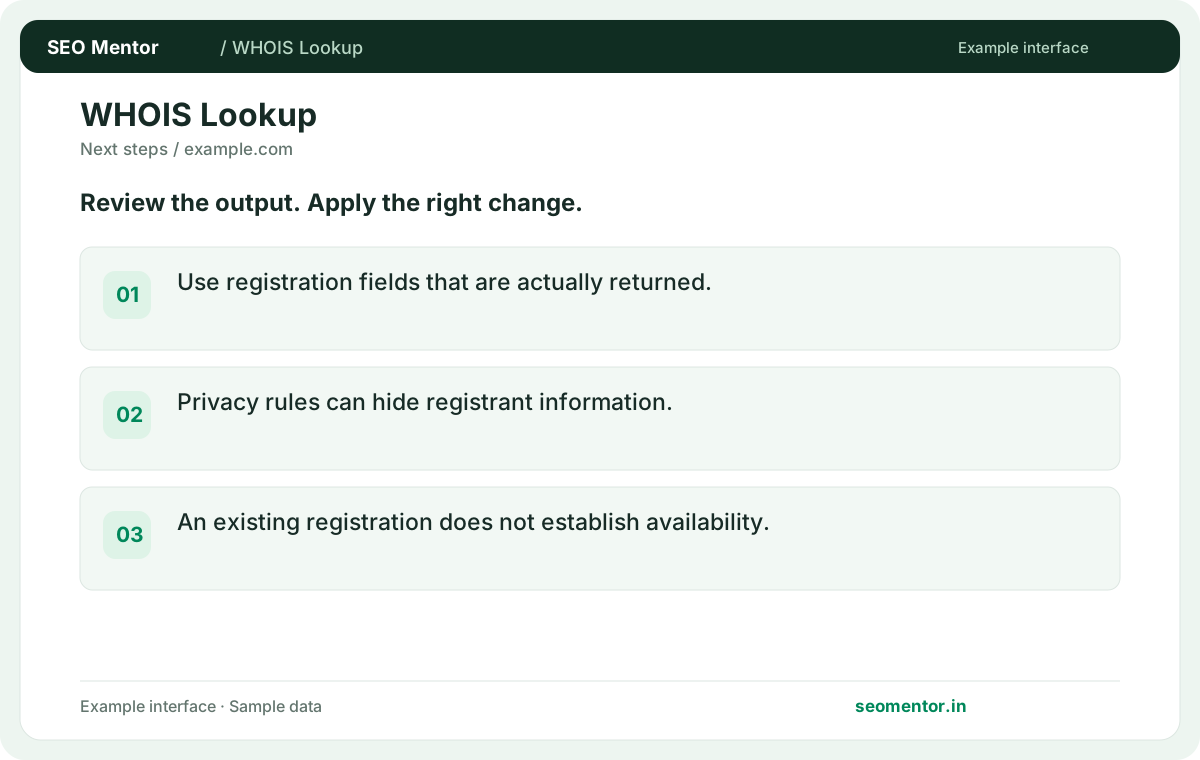
Use registration fields that are actually returned. Compare the reported domain, registrar, created with the page or domain you intended to check.
Look up public domain registration details, including registrar, nameservers and expiry information where available from RDAP records.
Start WHOIS Lookup ↗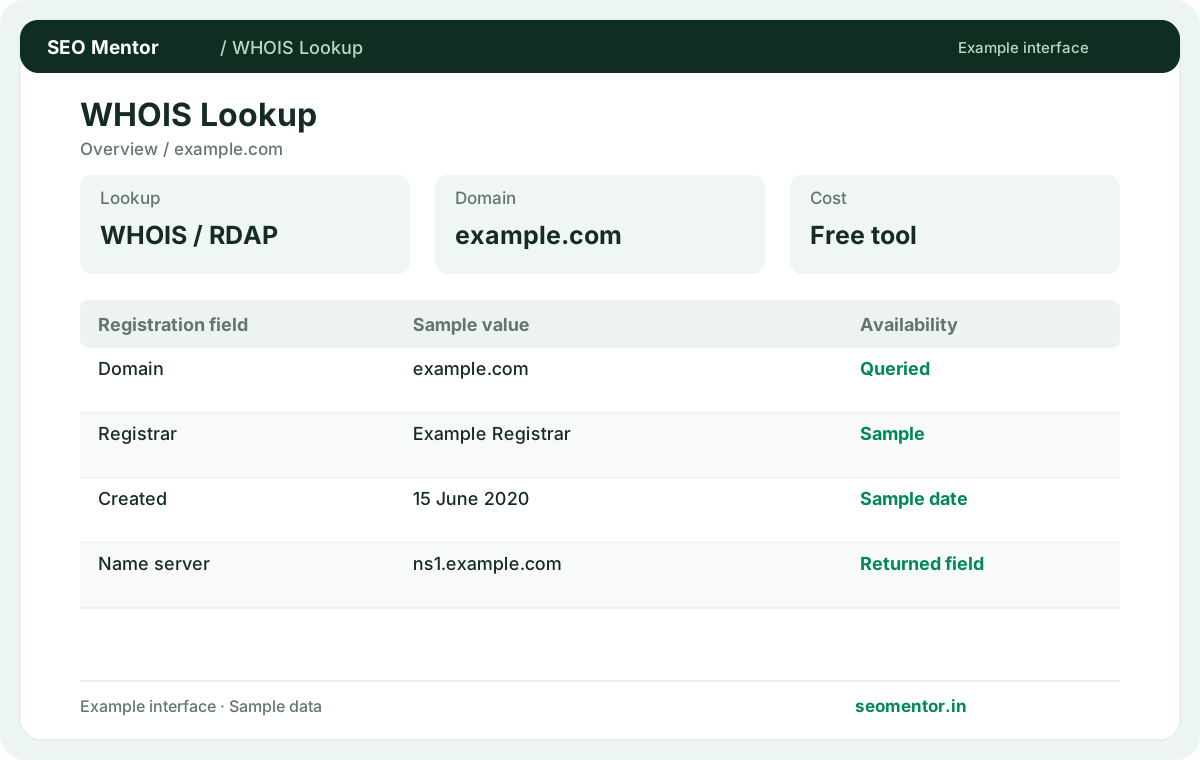
Enter the relevant information to review the available result and any applicable report options.
Free to use. Results appear on this page.
Public registration data can be redacted and is not conclusive proof of domain ownership. Start with the questions your audience actually asks.
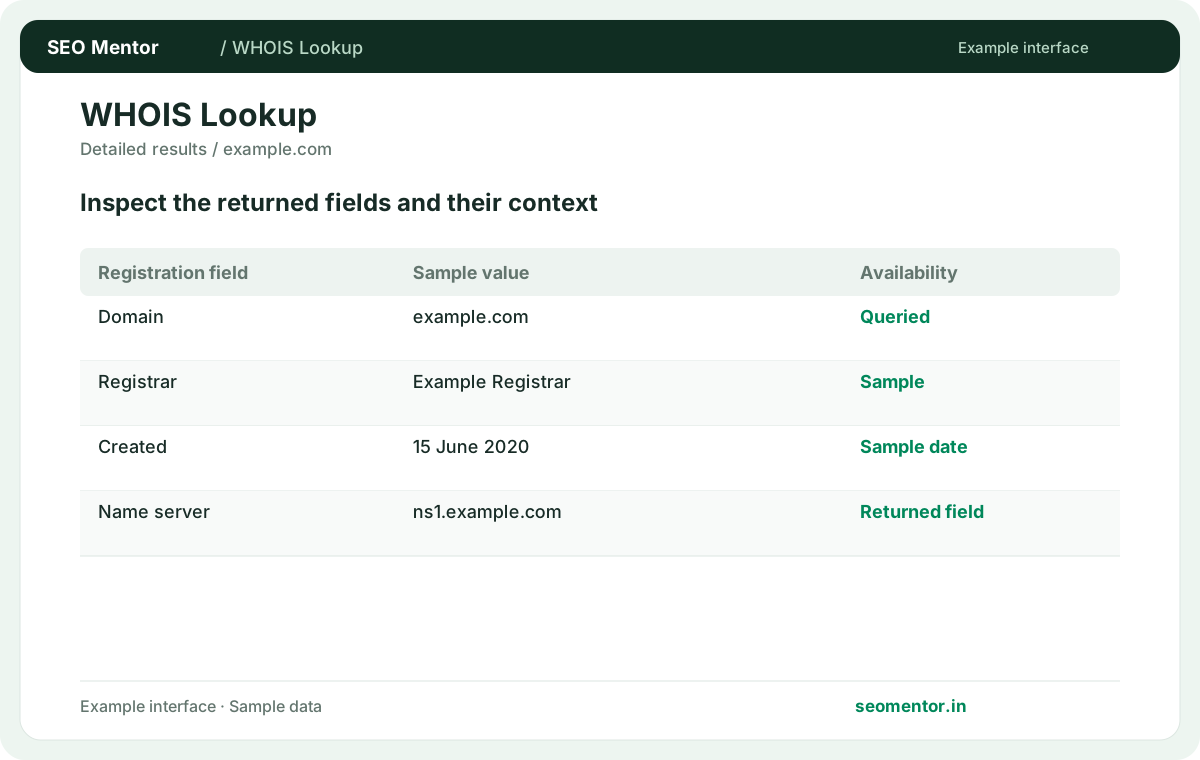
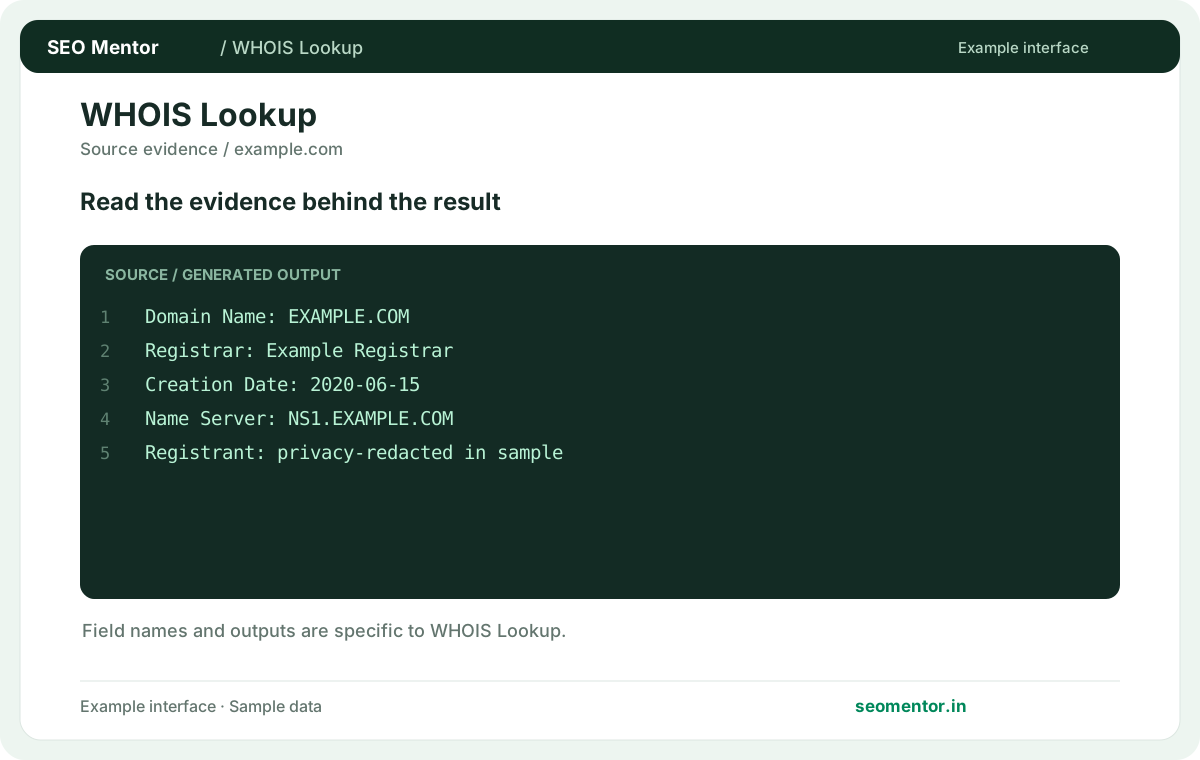
Compare registrar details, registration events, nameserver records in context before deciding what to change.
Record what the report actually shows, compare relevant pages and validate findings before publishing changes.
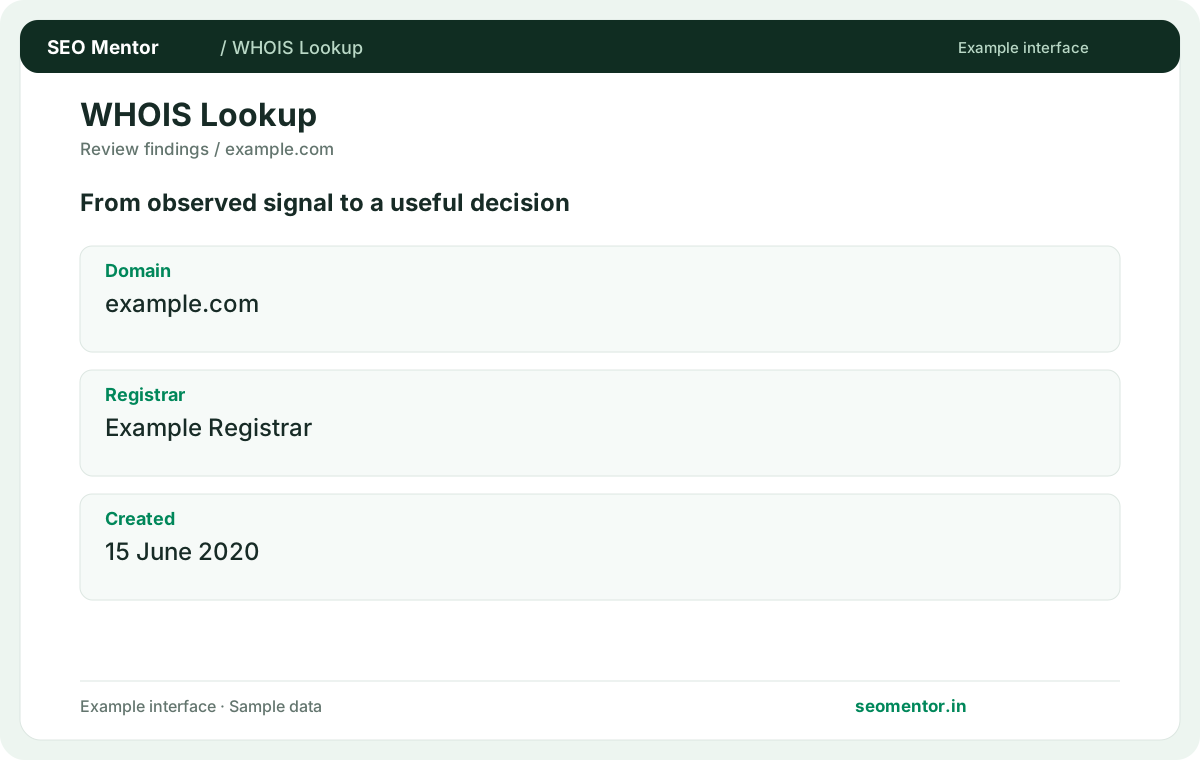
Public registration data can be redacted and is not conclusive proof of domain ownership. Recheck after substantive updates rather than relying on sample illustrations.
Look up available WHOIS or RDAP information when researching a domain for your business. Use registrar, nameserver and public registration fields as context, recognising that registrant details may be private.
Use registration fields that are actually returned. Compare the reported domain, registrar, created with the page or domain you intended to check.
Privacy rules can hide registrant information. An existing registration does not establish availability.
Keep the result alongside the page or domain reviewed, so you can compare the evidence after making changes.
It reads structured public registration records where available. Returned fields depend on the registry and domain extension.
Related check — What if a domain has no returned expiry date? If the public expiry field is missing or differs from your account, sign in to the registrar and confirm the renewal setting and actual expiration date there. The lookup is useful context when auditing domains but should not be the basis for a renewal deadline.
It names the organisation handling the registration when disclosed. It may differ from the DNS or website host.
Related check — Can WHOIS tell me where a site is hosted? Registration records describe the domain and may list nameservers. Use DNS and network checks for hosting clues.
Public registration records can redact personal information. Use the public contact process provided by the registry or registrar.
Related check — How do I use WHOIS for an abuse report? Identify the relevant public registrar or abuse contact where available. Document the exact issue and affected domain.
Registration records describe the domain and may list nameservers. Use DNS and network checks for hosting clues.
Related check — What does a registrar entry tell me? It names the organisation handling the registration when disclosed. It may differ from the DNS or website host.
Look for a public registration event labelled creation or registration. Other dates can refer to updates and renewals.
Related check — What does a domain status code mean? It records a condition set by the registry or registrar. Check the registrar dashboard before acting on a transfer or renewal.
It records a condition set by the registry or registrar. Check the registrar dashboard before acting on a transfer or renewal.
Related check — Why are nameservers useful during a transfer? Record them before changing providers so you can verify delegation afterwards. DNS service can remain separate from registration.
Record them before changing providers so you can verify delegation afterwards. DNS service can remain separate from registration.
Related check — Does a public lookup confirm control of a domain? It describes public registration data. Verify control using an authorised DNS or site ownership challenge.
Verify the date through the registrar account. Public records may omit details even for active domains.
If the public expiry field is missing or differs from your account, sign in to the registrar and confirm the renewal setting and actual expiration date there. The lookup is useful context when auditing domains but should not be the basis for a renewal deadline.
It describes public registration data. Verify control using an authorised DNS or site ownership challenge.
Related check — Why does this WHOIS lookup use RDAP data? It reads structured public registration records where available. Returned fields depend on the registry and domain extension.
Identify the relevant public registrar or abuse contact where available. Document the exact issue and affected domain.
Related check — Why is the owner name hidden? Public registration records can redact personal information. Use the public contact process provided by the registry or registrar.
SEO Mentor helps you identify opportunities. SEOKart can help put those findings into action with professional SEO services, technical improvements and ongoing optimisation.
Explore SEOKart SEO Services