Review the 1 details
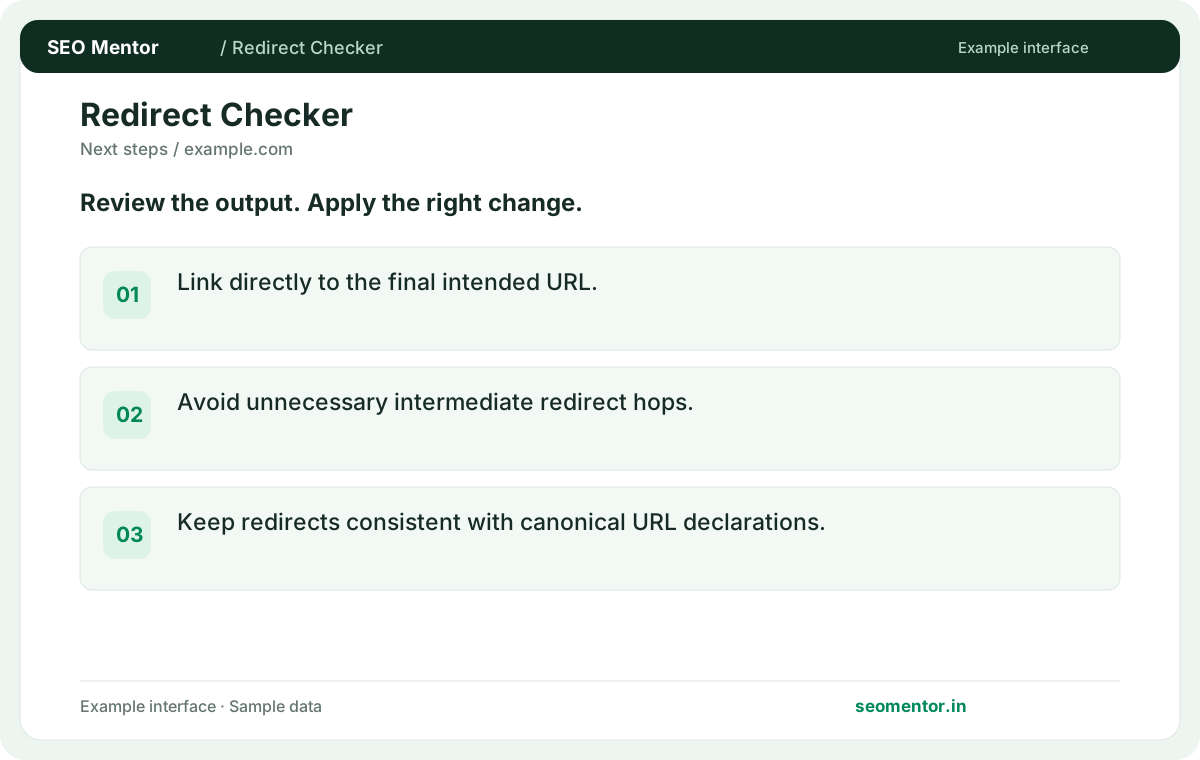
Link directly to the final intended URL. Compare the reported 1, 2, 3 with the page or domain you intended to check.
Trace redirect hops from a public URL. See status codes and the final destination to spot unnecessary chains and migration issues.
Start Redirect Checker ↗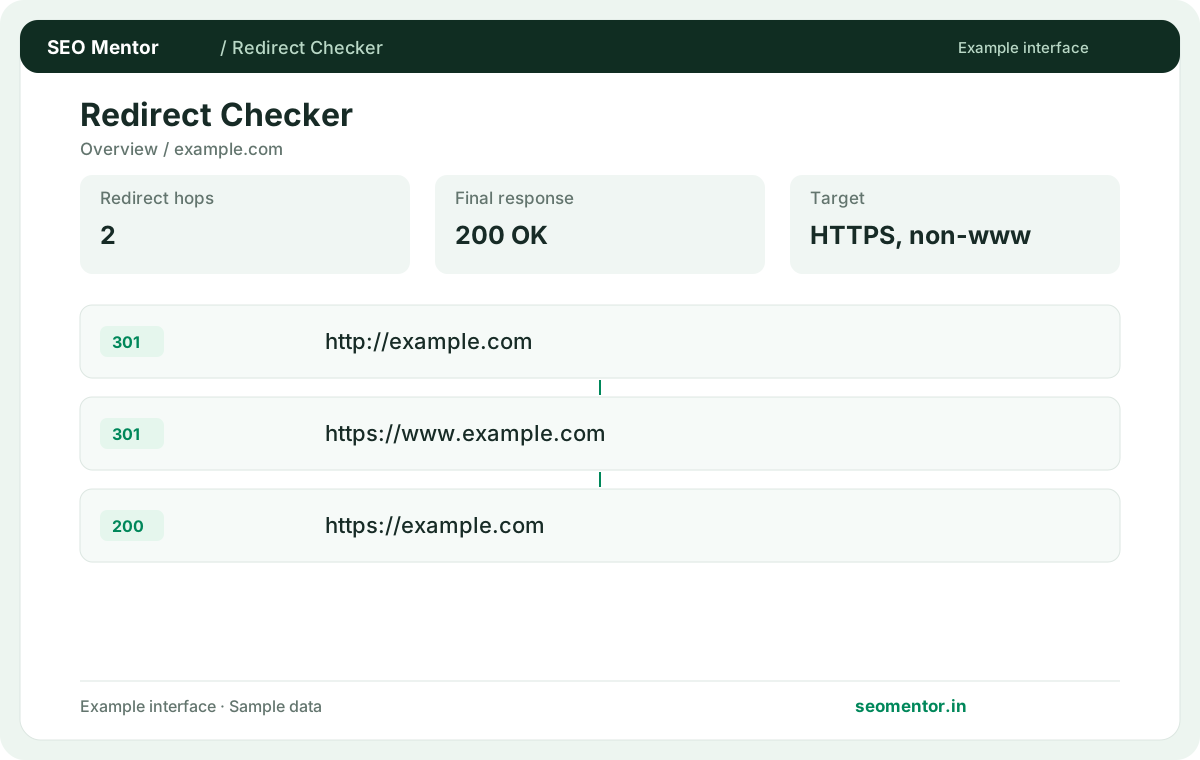
Enter your details and run the free tool to see the results on this page.
Fix unnecessary redirect chains and ensure important service pages reach their intended final URLs. Start with the questions your target audience actually asks.
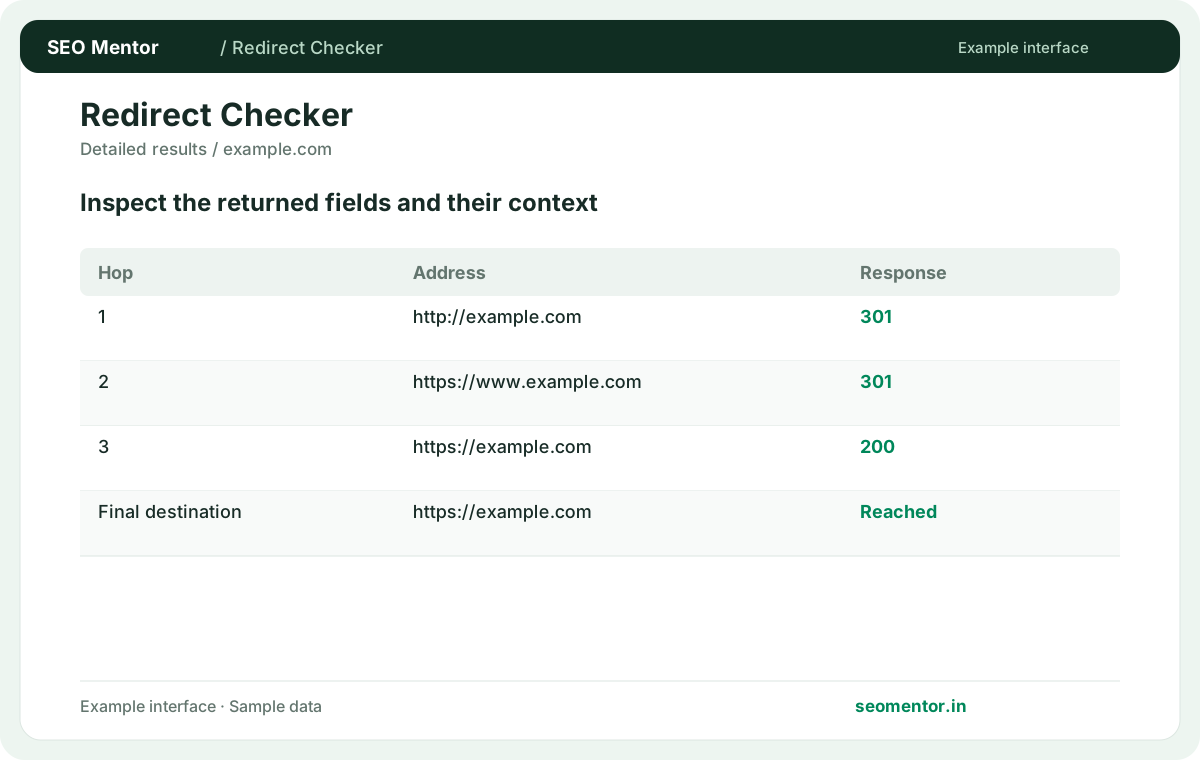
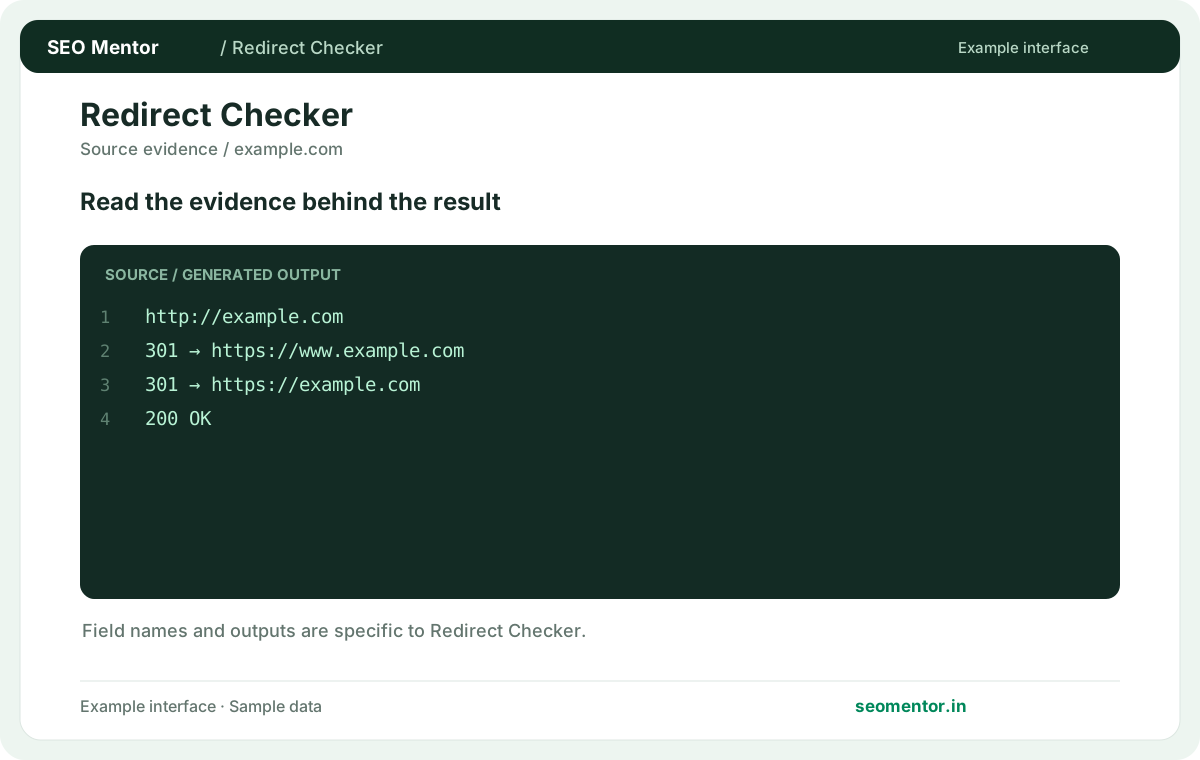
Compare initial url, redirect hops, final destination in context before deciding what to change.
Record what the report actually shows, compare relevant pages and validate findings before publishing changes.
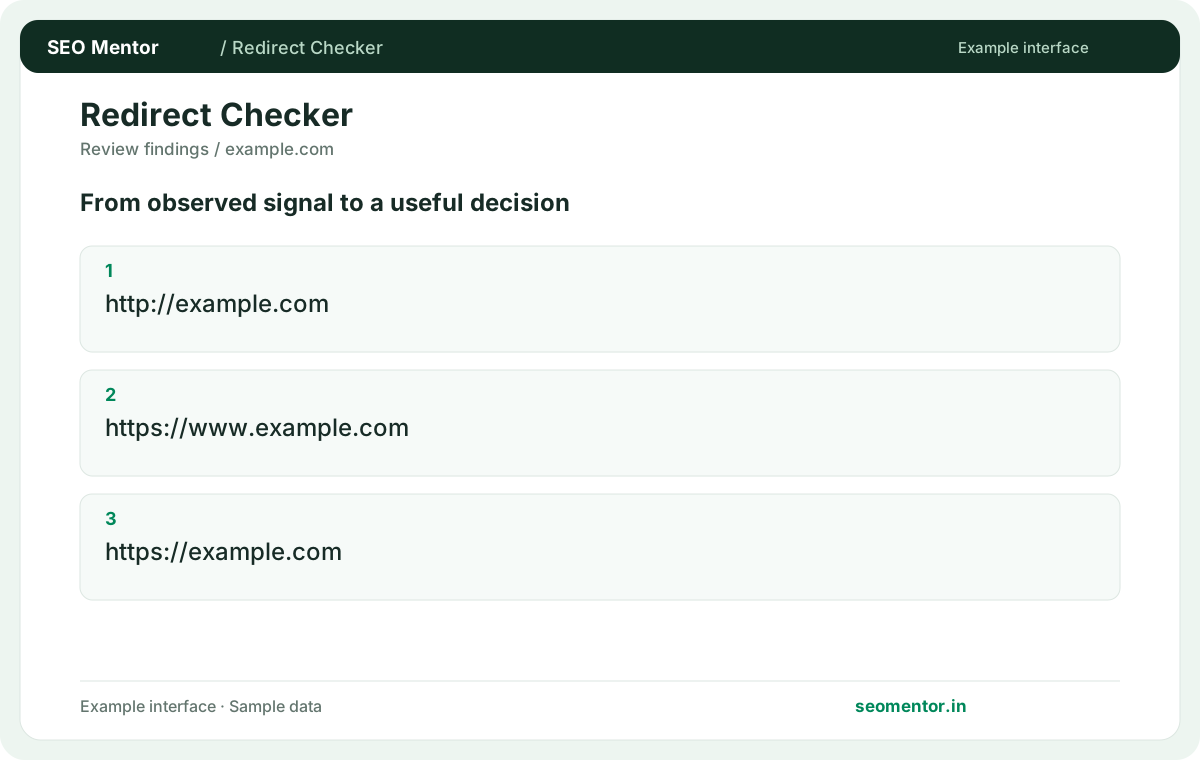
Fix unnecessary redirect chains and ensure important service pages reach their intended final URLs. Recheck after substantive updates rather than relying on sample illustrations.
Follow the route from an old or alternate address to its final destination. businesses changing hosting, domain preferences or page URLs should check that visitors reach the intended live page without avoidable hops.
Link directly to the final intended URL. Compare the reported 1, 2, 3 with the page or domain you intended to check.
Avoid unnecessary intermediate redirect hops. Keep redirects consistent with canonical URL declarations.
Keep the result alongside the page or domain reviewed, so you can compare the evidence after making changes.
It is a sequence of intermediate responses before the final destination. Point links at the final page when you control them.
Related check — What if the final destination returns 404? Correct the target or mapping. A successful redirect response cannot make a missing destination usable.
Look for a URL that reappears in the sequence. Check competing rewrite rules or application redirects.
Related check — Can query parameters be lost in redirects? Test a URL such as /old-offer?campaign=spring and inspect the final destination. Preserve the query only when the receiving page or analytics needs it, and verify that the redirect does not send users through an extra hostname or protocol hop.
Submit the HTTP address and confirm the destination uses HTTPS on the intended host. Check www variants separately.
Related check — Can devices receive different redirects? Server logic can vary by device, cookies or region. Compare an ordinary browser request when results differ.
It indicates a temporary redirect that preserves the request method. Verify the application's intended behaviour before changing it.
Related check — Should a redirect preserve the trailing slash? Follow one consistent URL policy. Verify the final link, canonical and sitemap match that policy.
Old links and indexed URLs may still receive visitors. Confirm each important path has a relevant destination.
Related check — How should I simplify a chain? Map old URLs straight to their preferred destination. Test both direct and legacy entry points after publishing.
Rewrite rules can retain, alter or discard them. Test an example query if parameters affect content or attribution.
Test a URL such as /old-offer?campaign=spring and inspect the final destination. Preserve the query only when the receiving page or analytics needs it, and verify that the redirect does not send users through an extra hostname or protocol hop.
Follow one consistent URL policy. Verify the final link, canonical and sitemap match that policy.
Related check — How can I verify HTTP to HTTPS? Submit the HTTP address and confirm the destination uses HTTPS on the intended host. Check www variants separately.
Correct the target or mapping. A successful redirect response cannot make a missing destination usable.
Related check — What is a redirect chain? It is a sequence of intermediate responses before the final destination. Point links at the final page when you control them.
Server logic can vary by device, cookies or region. Compare an ordinary browser request when results differ.
Related check — What can a 307 redirect indicate? It indicates a temporary redirect that preserves the request method. Verify the application's intended behaviour before changing it.
Map old URLs straight to their preferred destination. Test both direct and legacy entry points after publishing.
Related check — Why test old paths after a migration? Old links and indexed URLs may still receive visitors. Confirm each important path has a relevant destination.
SEO Mentor helps you identify opportunities. SEOKart can help put those findings into action with professional SEO services, technical improvements and ongoing optimisation.
Explore SEOKart SEO Services