Review the en-in details
Use valid language and region codes. Compare the reported en-in, en-gb, en-us with the page or domain you intended to check.
Check the hreflang tags on a public URL. Review the language and region codes and the alternate URLs declared for each version of the page.
Start Hreflang Tag Generator ↗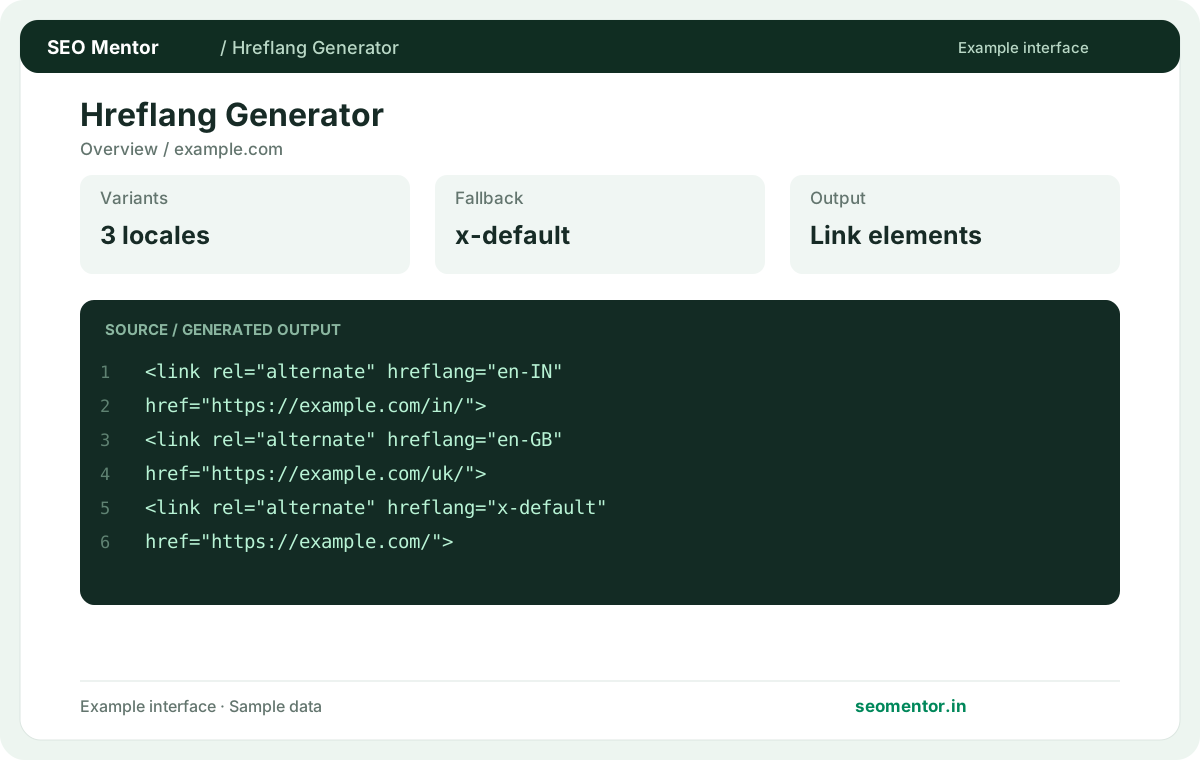
Enter the relevant information to review the available result and any applicable report options.
Use hreflang only for genuine alternate versions and verify reciprocal references before deployment. Start with the questions your audience actually asks.
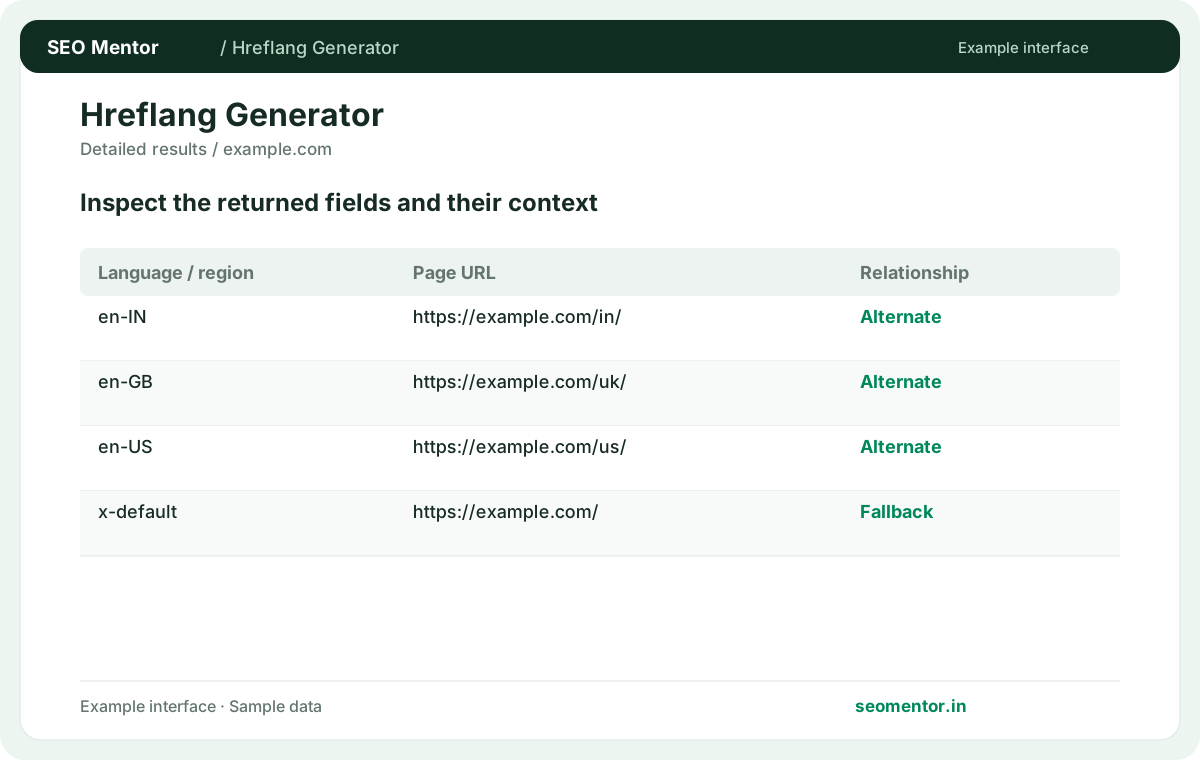
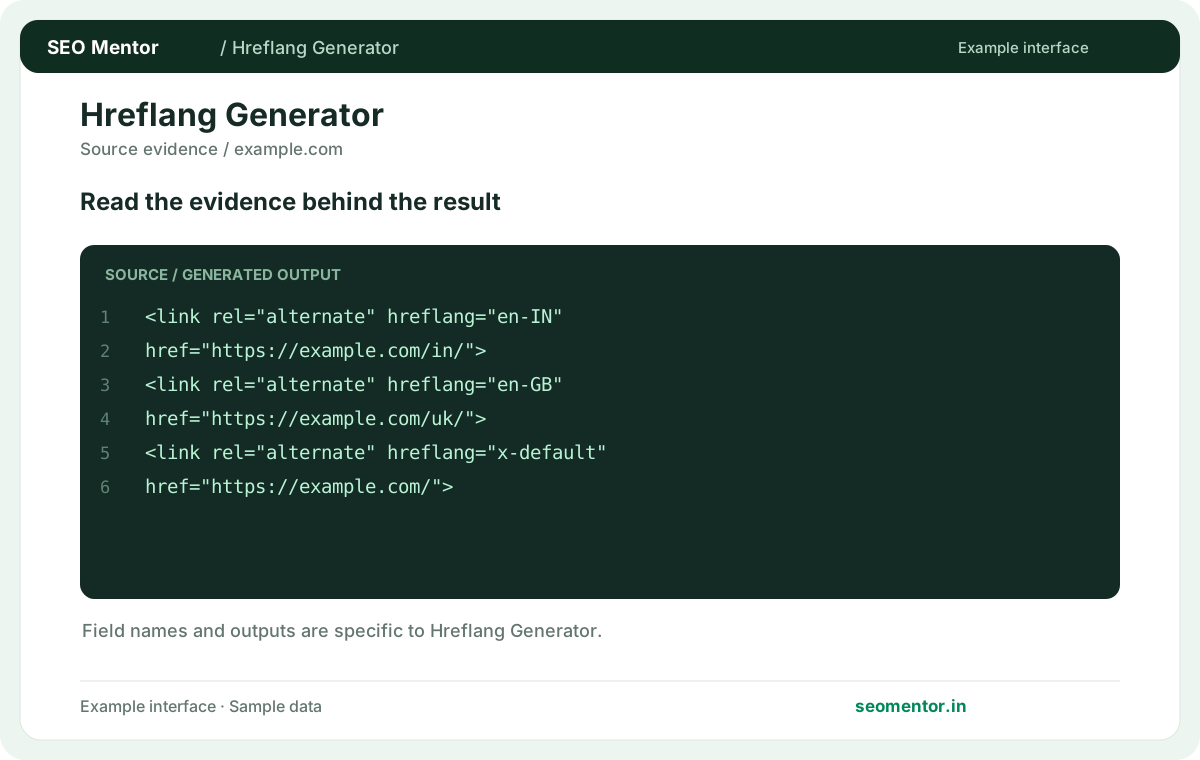
Compare language and region codes, alternate url sets, reciprocal annotations in context before deciding what to change.
Record what the report actually shows, compare relevant pages and validate findings before publishing changes.
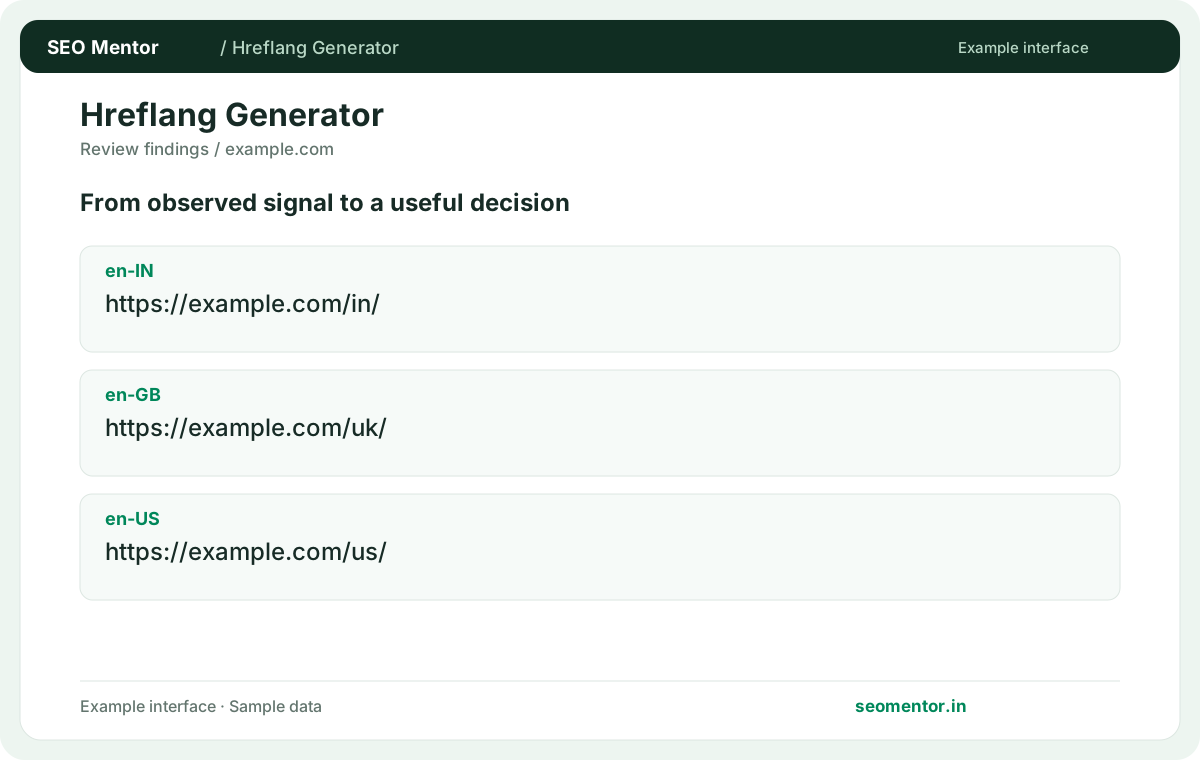
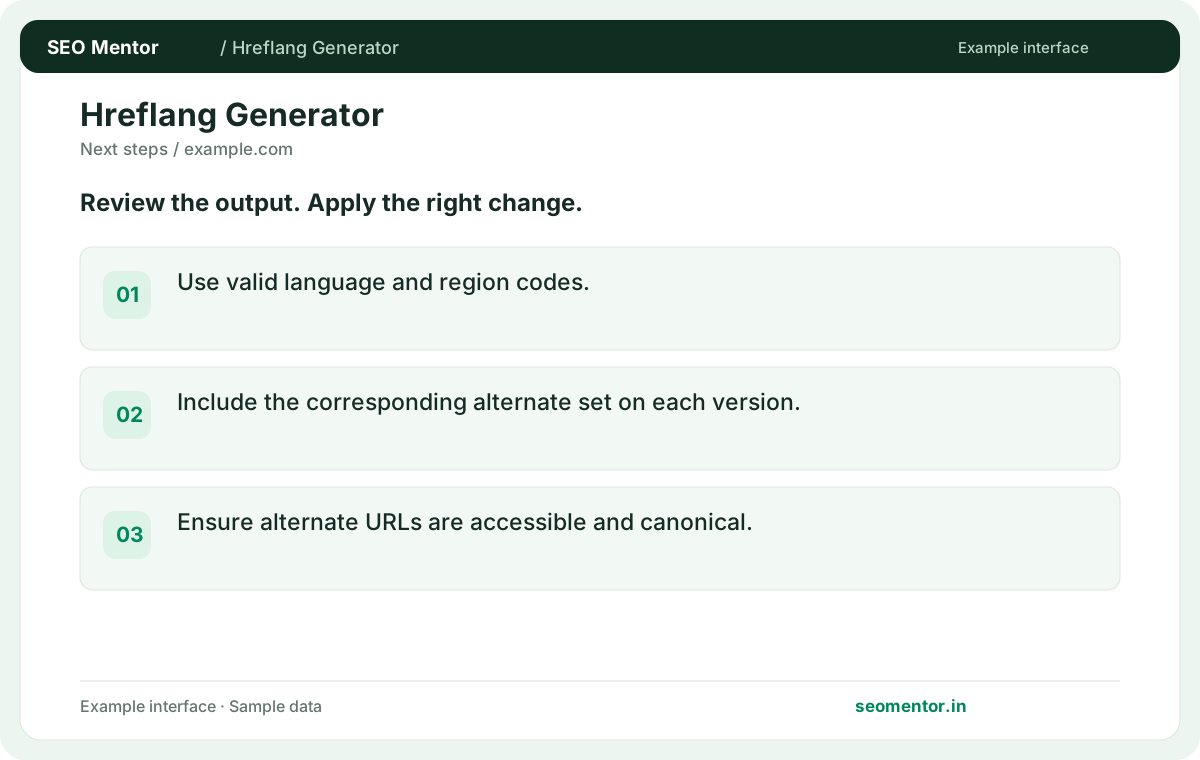
Use hreflang only for genuine alternate versions and verify reciprocal references before deployment. Recheck after substantive updates rather than relying on sample illustrations.
Prepare alternate-language or regional links for genuine versions of your pages. businesses with separate language or country experiences should use valid locale codes and consistent reciprocal references.
Use valid language and region codes. Compare the reported en-in, en-gb, en-us with the page or domain you intended to check.
Include the corresponding alternate set on each version. Ensure alternate URLs are accessible and canonical.
Keep the result alongside the page or domain reviewed, so you can compare the evidence after making changes.
It reads alternate language or regional annotations exposed by the public page. Check the language codes and URLs in the report.
Related check — What is x-default used for? It can identify a fallback version, such as a language selector. Make sure that fallback URL is useful to visitors without a direct regional match.
Use the language of the content and add a region only where the page serves a distinct audience. Compare the selected codes across the cluster.
Related check — How do I distinguish a language from a country? Language codes describe the content language. Add a region to distinguish variants such as different currencies or regional services.
Each variant should identify its counterparts. Compare the annotations on both pages to find incomplete clusters.
Related check — What should I test after adding a new language? Inspect the new page and at least one existing variant. Check reciprocal links, response status and the selected canonical.
It can identify a fallback version, such as a language selector. Make sure that fallback URL is useful to visitors without a direct regional match.
Related check — What does the hreflang tool inspect? It reads alternate language or regional annotations exposed by the public page. Check the language codes and URLs in the report.
Reference the intended final page where practical. Follow each URL to verify that it resolves to the expected language and content.
If an English UK variant points to /uk/old-product and that address redirects to /uk/product, update alternate annotations to the final page. Check the reciprocal links from that UK page to its other variants after the change.
Review canonicals and hreflang together. A canonical to a different language can conflict with the intent to expose both versions.
Related check — Can hreflang translate a page? It links existing alternatives. Publish the actual translated or localised content before annotating the relationship.
Language codes describe the content language. Add a region to distinguish variants such as different currencies or regional services.
Related check — How should I select a language code? Use the language of the content and add a region only where the page serves a distinct audience. Compare the selected codes across the cluster.
The tool inspects page markup. Review the sitemap itself if your implementation publishes alternate references there.
Related check — Can I annotate a redirected alternate URL? If an English UK variant points to /uk/old-product and that address redirects to /uk/product, update alternate annotations to the final page. Check the reciprocal links from that UK page to its other variants after the change.
Inspect the new page and at least one existing variant. Check reciprocal links, response status and the selected canonical.
Related check — Why do reciprocal links matter? Each variant should identify its counterparts. Compare the annotations on both pages to find incomplete clusters.
It links existing alternatives. Publish the actual translated or localised content before annotating the relationship.
Related check — Should language alternates share one canonical? Review canonicals and hreflang together. A canonical to a different language can conflict with the intent to expose both versions.
SEO Mentor helps you identify opportunities. SEOKart can help put those findings into action with professional SEO services, technical improvements and ongoing optimisation.
Explore SEOKart SEO Services